
Media
Say No To Mixed Waste For Clean and Green Environment: Snithik Dekate


Sanjivani International School, Kharghar in a collaboration with Witheridge School of UK have started a great initiative of creating awareness about Responsible consumption. The students of class 5 are involved in these projects. The students understand the topic along with self-study, discussions and teachers’ guidance.
Snithik Dekate a class 5 student of Sanjivani International School, Kharghar has presented a poster on segregation of waste to Mr Pramit Saran a well-known social worker, Astro healer and a local leader.

Snithik Dekate with his mother, Dr. Sheetal Dekate
This poster intends to spread awareness about the segregation of household, e-waste and biomedical wastes. This will help to reduce pollution in our surroundings and add beauty to our city. When we segregate waste, it reduces the amount of waste that reaches the landfills, thereby taking up less space. Pollution in the air and water can be considerably reduced when hazardous wastes are separated and treated separately. This can be a small step for the reduction of Global warming too.
“Waste segregation” means dividing waste into dry and wet. Dry waste includes wood and related products, metals and glass. Wet waste typically refers to organic waste usually generated by eating establishments and are heavy in weight due to dampness. Waste segregation is different from waste sorting.

Waste segregation is the grouping of waste into different categories. Each waste goes into its category at the point of dumping or collection, but sorting happens after dumping or collection. Segregation of waste ensures pure, quality material. Sorting on the other hand will end up producing impure materials with less quality.







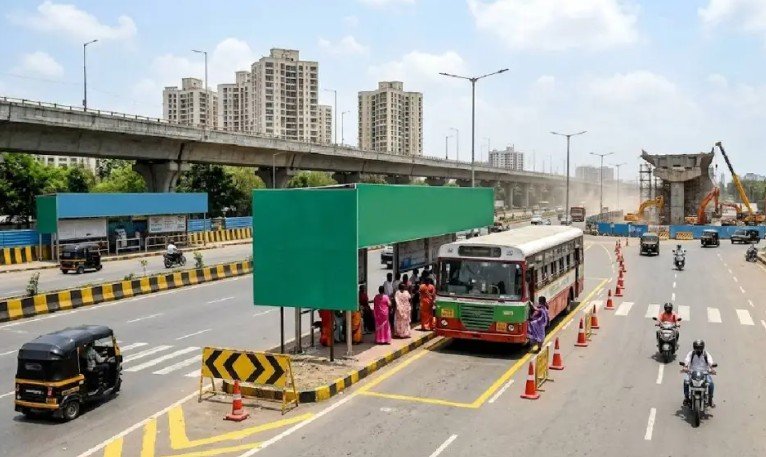
NMMT moves stops by 50 metres as authorities prepare traffic arrangements for demolition work.
The Bus Stop
Commuters travelling through Nerul and Turbhe may soon see changes in traffic movement as authorities prepare to demolish the remaining sections of the Turbhe flyover. To minimise inconvenience to passengers, NMMT has shifted the bus stops at Nerul LP by around 50 metres in both directions.
The bus stop for passengers travelling towards Panvel has been moved about 50 metres ahead, while the stop on the Vashi-bound side has also been relocated by a similar distance. New poles have been installed at the revised locations. Drivers and conductors from NMMT’s Turbhe, Asudgaon and Ghansoli depots have been instructed to use the new stops for passenger pick-ups and drop-offs.
The changes come as officials prepare for the demolition of the remaining two sections of the Turbhe flyover. One of the three sections is already undergoing work, while the demolition of the other two could affect traffic between Thane and Vashi. Traffic officials and the Public Works Department are working on an alternative traffic plan, including possible diversions through the Nerul LP underpass. However, the final diversion route and demolition schedule have not yet been announced.
Officials said the remaining sections of the flyover need to be demolished due to structural deterioration. Permissions and other preparations are currently underway.
For regular commuters, the temporary bus-stop shift is expected to be an important change to note as authorities work on the larger traffic management plan.
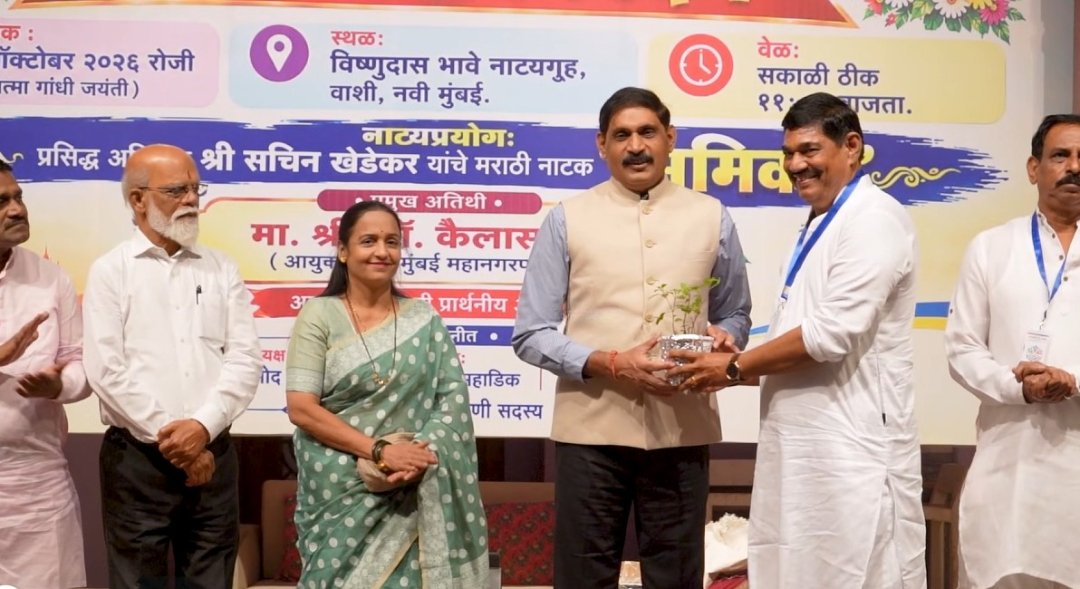
Special play performance in Vashi raises support for a proposed facility bringing senior citizens, orphans and destitute women together.
The Anniversary
The fourth anniversary of Manav Vikas Trust Maharashtra was celebrated at Vishnudas Bhave Natyagruha in Vashi, with a focus on its ambitious Anand Ashram project. The trust organised a special performance of the play Bhumika, featuring well-known actor Sachin Khedekar, to raise financial support for the initiative.
The proposed Anand Ashram aims to bring an old-age home, an orphanage and a shelter for destitute women together under one roof. Instead of keeping these groups separate, the trust wants to create a family-like environment where they can live together with dignity, security and emotional support. Navi Mumbai Municipal Commissioner Dr Kailas Shinde attended the event as the chief guest. Several civic officials, former and serving corporators, social workers and other dignitaries were also present.
As part of its social commitment, the trust donated Rs 1,111 to the Chief Minister’s Relief Fund for people affected by drought-like conditions. The amount was handed over to Commissioner Shinde through a cheque. The trust also launched a cloth-bag distribution drive to promote a plastic-free Maharashtra. Trust secretary Vikas Manik said the Anand Ashram is planned in Pali, Raigad, where the organisation has already purchased land. The project is expected to cost around Rs 3–4 crore and is targeted for completion within three years.
The facility is planned to provide healthcare support for senior citizens, education for orphaned children and financial and educational assistance for women. The trust hopes to create a peaceful, inclusive space where people can live as one extended family.
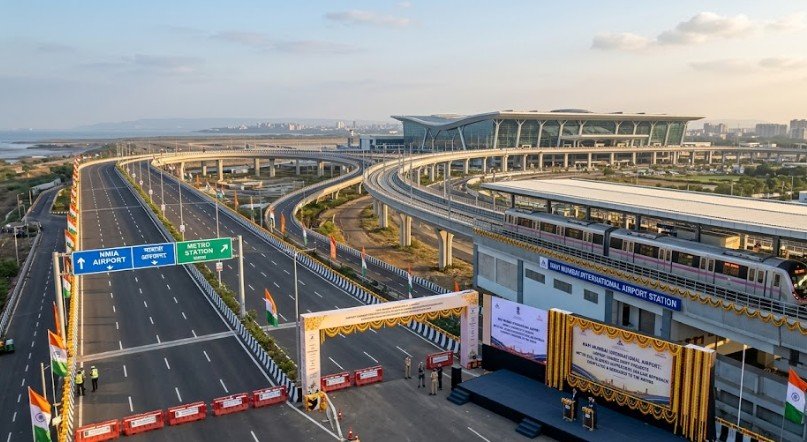
New roads and bridges to connect Belapur, Ulwe, Panvel and Khandeshwar with the airport.
The Inauguration
Several key roads and bridges built to improve connectivity to Navi Mumbai International Airport are ready for use but are still awaiting their official inauguration. The new network is expected to provide smoother access to the airport from Belapur, Ulwe, Panvel, Khandeshwar and Karanjade. It will also offer alternative routes for motorists and help reduce pressure on the Sion-Panvel Highway.
One of the important routes will connect Kalamboli Junction through National Highway 548 to the airport’s cargo entrance. The route is also expected to make it easier for container traffic travelling between JNPA and the airport’s cargo facilities.
CIDCO has developed the SBR-9 route to connect the northern side of the airport with the wider road network. A 60-metre-wide bridge has also been constructed near the cargo entrance, while other bridges provide connections towards Khandeshwar railway station and the Karnala Sports Academy area. The road and bridge projects have involved an estimated investment of around Rs 813 crore. Once opened, they are expected to reduce travel time by around 30 minutes on some routes.
Although construction work has been completed, safety inspections and other formalities are still underway. CIDCO officials said the routes will be opened to the public after the necessary procedures and inauguration are completed. For residents and future airport users, the opening of these links is expected to make reaching the new airport considerably more convenient.

Nerul Bus Stops Shifted Ahead of Turbhe Flyover Demolition

NMMC Pays Tribute to Gandhi and Shastri on Birth Anniversaries

CBD Belapur’s Sector 9 to Get New Open Gym

Nidhi Razdan, fake Harvard professorship, and here is the explanation through her blog.

As the arrangement with Prashant Kishor falls through Rahul Gandhi has gone overseas again and is uncontactable

BSNL reveals all new 4G plans starting at ₹16

-
 Fact Check6 years ago
Nidhi Razdan, fake Harvard professorship, and here is the explanation through her blog.
-
 India4 years ago
As the arrangement with Prashant Kishor falls through Rahul Gandhi has gone overseas again and is uncontactable
-
 Technology5 years ago
BSNL reveals all new 4G plans starting at ₹16
-

 Latest News5 years ago
Government has spent ₹9,725 crores on Covid-19 vaccination drive so far
-

 Latest News5 years ago
Tata wins Air India with ₹18,000 crore bid
-

 Latest News5 years ago
Jharkhand government cuts Petrol price by massive ₹25 a litre but with a catch
-

 Latest News5 years ago
Raj Kundra Gave ₹25 Lakh Bribe to Mumbai Crime Branch to Avoid Arrest
-

 Navi Mumbai5 years ago
Navi Mumbai civic body raids and tests morning walkers, many found COVID positive