
Latest News
Ukraine crisis might push one-fifth of the worlds population into poverty : UN


According to UN Secretary-General Antonio Guterres, at least one-fifth of humankind, or 1.7 billion people, might face terrifying levels of poverty and famine if the Ukraine crisis intensifies. In an interview with Czech Seznam Zpravy, UN Secretary-General Ban Ki-moon voiced worry over halted food grain shipments from Ukraine to poor countries, which might result in people being “collateral damage” of Russia’s invasion of Ukraine. “The conflict is amplifying a three-dimensional catastrophe including food, energy, and money,” Guterres warned.
The rise in food, oil, fuel, and fertilizer costs, fueled by Russia and Ukraine’s influence in these markets, has heightened the possibility of global instability and unrest. While the United Nations has provided humanitarian help to those in Ukraine who are paying the heaviest price for the war, less attention has been devoted to the war’s global repercussions, which are already wracked by poverty, starvation, and social upheaval. Guterres exemplified the problem by mentioning the dreadful state of food shortages in the Sahel.
“In the Sahel, a fatal food crisis is being driven by conflict and climatic shocks. The war in Ukraine would exacerbate millions of people’s misery by raising food and gasoline costs “In a Twitter post, he said.
The conflict has exacerbated the problems that underdeveloped nations have been dealing with as a result of the two-year-long COVID epidemic. A “storm” of difficulties has erupted as a result of new concerns such as climate change and a lack of access to necessary resources for financial recovery in the context of persisting and expanding disparities, threatening to damage the economy of such nations.
“Quite so many as 1.7 billion people — one-third of whom are already poor — are now very vulnerable to disruptions in food, energy, and financial systems, which are fueling poverty and hunger,” Guterres warned.
The Ukraine situation is hastening food shortages, according to UN Secretary-General Ban Ki-moon.
The underlying concern, among many others, is food supply. The war has generated serious supply-chain bottlenecks because Ukraine and Russia produce 30% of the world’s wheat and barley, with at least one-third of their goods being exported. As a result, food costs have risen at an unprecedented rate. “Russia and Ukraine account for more than half of the world’s wheat imports,” he explained, “including some of the world’s poorest and most vulnerable countries.” Both frontline nations are also responsible for a fifth of all grain and half of all sunflower oil output, with exports to at least 45 industrialized countries, according to Guterres.
Hunger and malnutrition are on the rise, especially among young children, as the cost of gasoline and food rises to unsustainable levels. Furthermore, emerging countries will drown in debt, weakening their buying power and reducing their economic possibilities. “This is putting in motion a potentially vicious cycle of inflation and stagnation, often known as stagflation,” the UN head added. Guterres’ comments coincided with those of IMF managing director Kristalina Georgieva, who warned on Thursday that the Ukraine crisis will cause at least 143 economies’ forecasts to be revised downward this year. The 86 percent of global GDP is accounted for by these countries.





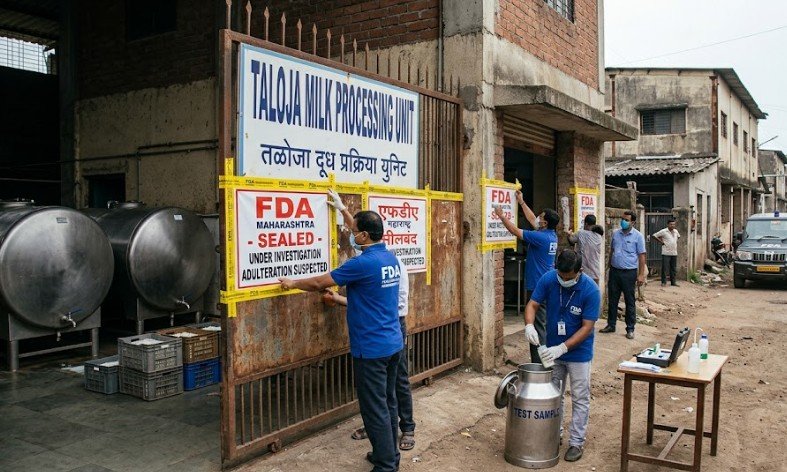
Authorities destroy 1,494 litres of suspected adulterated milk and register a criminal case against six people following inspections in Panvel.
The Adulteration
The Food and Drug Administration (FDA) has suspended the licences of three dairy units in the Taloja industrial area of Panvel following inspections that reportedly revealed violations of food safety and hygiene standards. The action was taken against Mateshwari Foods, Sawariya Milk and Milk Products, and Royal Foods, located in Balaji Industrial Park, Taloja.
During the inspection, FDA officials destroyed 1,494 litres of suspected adulterated milk and seized curd for further examination. Samples have been sent for laboratory testing, and further action will depend on the test results. A criminal case has also been registered against six people at Taloja police station. They are accused of involvement in the production, storage and sale of adulterated food products, raising concerns about the safety of dairy products supplied to consumers.
The FDA’s action highlights the importance of maintaining proper hygiene and following food safety regulations in dairy processing units. Authorities are investigating the matter, and further steps may be taken based on the findings. The incident has also raised concerns about the quality of milk and milk products available in the market, underlining the need for regular inspections to protect public health.
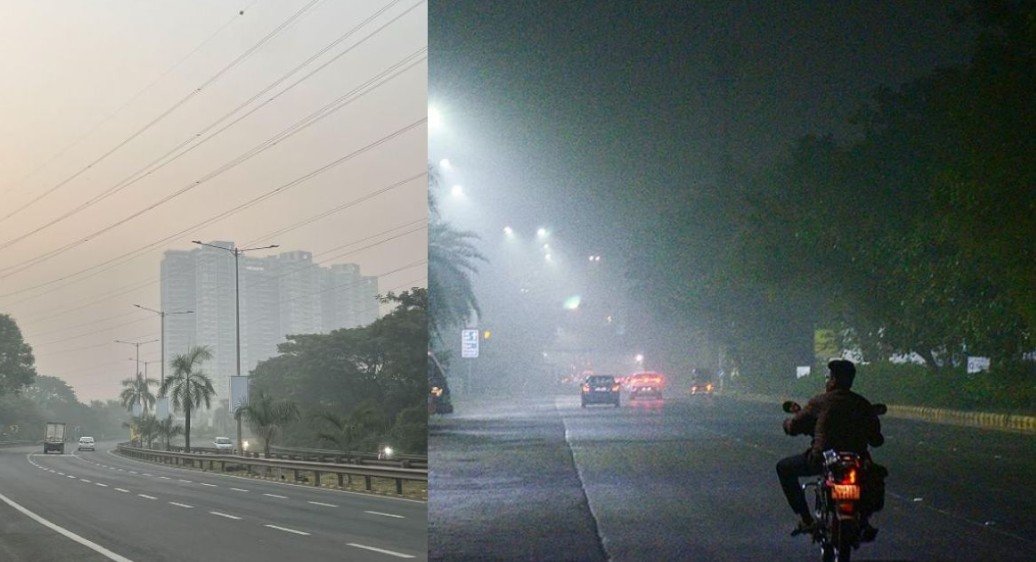
Mahape records the city’s highest AQI at 141, while environmentalists call for stricter action and improved pollution standards.
The Demand
Air pollution continues to be a concern in Navi Mumbai, with the Air Quality Index (AQI) remaining above 100 since October 16. According to the Central Pollution Control Board’s (CPCB) National Air Quality Data Management System, the city recorded an AQI of 121 at 2.05 pm on October 19. Mahape reported the highest AQI at 141, while the monitoring station in Sector 2E, Kalamboli, recorded the lowest at 103. Other locations also registered elevated readings, including CBD Belapur (133), Koparipada-Vashi (131), Tondare-Taloja (125), Sanpada (115) and Nerul (109). PM10 and PM2.5 were among the prominent pollutants recorded in CBD Belapur.
Environmental activist BN Kumar criticised the administration’s response, stating that rising pollution levels reflected inadequate regulation of construction activities, vehicle emissions and industrial pollution. He urged residents to demand accountability and concrete measures to protect public health and the environment. Activists have also questioned the difference between India’s AQI classification and that of the United States. Under India’s system, readings between 101 and 200 are classified as ‘Moderately Polluted’. In the US, readings of 101–150 fall under ‘Unhealthy for Sensitive Groups’.
Jyoti Nadkarni, a Kharghar-based resident and environmental activist, called for India to upgrade its pollution standards and give environmental protection greater priority. The elevated AQI levels raise concerns for children, senior citizens and people with respiratory or cardiovascular conditions, who are particularly vulnerable to the effects of air pollution.

Activists question the legality of installations, citing possible tender violations, road safety risks and lack of civic permissions.
The Hoardings
Giant digital hoardings installed at prominent junctions along Palm Beach Road have sparked controversy over alleged tender violations, road safety and civic accountability. Environmental activists and advertising agencies have questioned whether the installations comply with the Navi Mumbai Municipal Corporation’s (NMMC) advertising contract.
The five-year contract awarded to M/s Ronak Advertising Agency reportedly covers 36 existing hoardings at 30 public and community toilet locations across the city. The agency is said to pay the civic body approximately Rs 2.25 crore annually. However, allegations have emerged that large digital displays have been installed at prominent Palm Beach Road junctions beyond the locations specified in the contract. Activists have demanded an investigation into the permissions granted and compliance with the tender conditions. Local MLA Manda Mhatre had earlier objected to the installation of large hoardings near traffic signals and reportedly sought cancellation of the contract.
Activists have also warned that bright, illuminated displays featuring changing advertisements could distract motorists at busy junctions and increase road safety risks. Questions have additionally been raised about structural safety inspections and compliance with applicable regulations. Environmental activist Bhaskar Machhare said a delegation of activists and advertising contractors had met the municipal commissioner to raise concerns over the allegedly unauthorised installations.
According to Machhare, the commissioner clarified that he had not granted permission for the hoardings and directed the concerned officials to take immediate action. The controversy has intensified demands for a thorough inquiry into the approval process and the role of officials responsible for regulating outdoor advertisements. The civic body’s response and any action against the disputed structures are now being closely watched.

FDA Suspends Three Dairy Units in Taloja Over Suspected Milk Adulteration

Navi Mumbai AQI Remains Above 100, Activists Demand Stronger Pollution Control

Giant Digital Hoardings on Palm Beach Road Raise Tender Violation Concerns

Nidhi Razdan, fake Harvard professorship, and here is the explanation through her blog.

As the arrangement with Prashant Kishor falls through Rahul Gandhi has gone overseas again and is uncontactable

BSNL reveals all new 4G plans starting at ₹16

-
 Fact Check6 years ago
Nidhi Razdan, fake Harvard professorship, and here is the explanation through her blog.
-
 India4 years ago
As the arrangement with Prashant Kishor falls through Rahul Gandhi has gone overseas again and is uncontactable
-
 Technology5 years ago
BSNL reveals all new 4G plans starting at ₹16
-

 Latest News5 years ago
Government has spent ₹9,725 crores on Covid-19 vaccination drive so far
-

 Latest News5 years ago
Tata wins Air India with ₹18,000 crore bid
-

 Latest News5 years ago
Jharkhand government cuts Petrol price by massive ₹25 a litre but with a catch
-

 Latest News5 years ago
Raj Kundra Gave ₹25 Lakh Bribe to Mumbai Crime Branch to Avoid Arrest
-

 Navi Mumbai5 years ago
Navi Mumbai civic body raids and tests morning walkers, many found COVID positive