
India
India is witnessing the melting of Himalayan glaciers

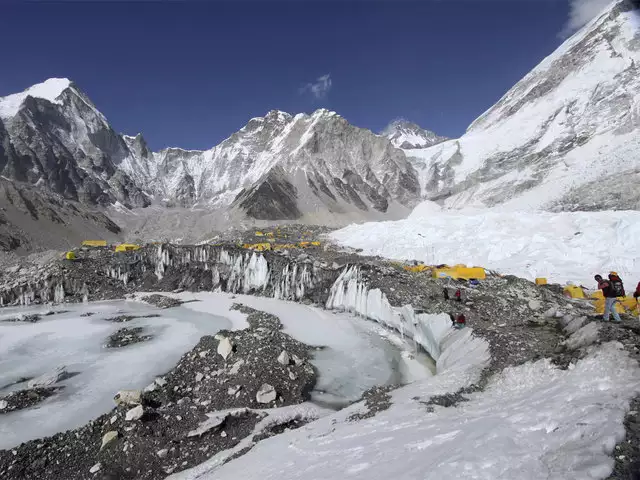
As temperatures increase and climate change wreaks havoc throughout the planet, the bulk of glaciers in the Himalayan area is melting. According to the Centre’s research, the phenomenon is occurring across nine major glaciers in the country, each of which is melting at a different rate.
Accelerated heterogeneous mass loss in Himalayan glaciers has been observed in studies led by the Geological Survey of India, Wadia Institute of Himalayan Geology, National Centre for Polar and Ocean Research, National Institute of Hydrology, Space Application Centre, and Indian Institute of Science.
In a written reply to the Lok Sabha, Minister of Science and Technology Dr Jitendra Singh stated: “In the Himalayan area, GSI has performed research on glacier melting using mass balance assessments on nine glaciers, as well as monitoring the recession/advance of 76 glaciers. The bulk of Himalayan glaciers is melting/retreating at various rates in different parts of the mountain range.”
INDIA’S MELTING GLACIERS
According to the Ministry of Earth Sciences, Hindu Kush Himalayan glaciers recede at a pace of 14.9-15.1 metres each year, compared to 12.7-13.2 metres in the Indus, 15.5-14.4 metres in the Ganga, and 20.2-19.7 metres in the Brahmaputra river basins.
However, mass balance analyses were undertaken by the University of Kashmir, Sikkim University, IISc, and WIHG for various Himalayan glaciers confirming a similar scenario, with the bulk of Himalayan glaciers melting or receding at varied rates. The Wadia Institute of Himalayan Geology, which has been monitoring a few glaciers in Uttarakhand since 1995, discovered that the Dokriani Glacier in the Bhagirathi basin has been retreating at 15-20 metres per year since 1995, and the Chorabari Glacier in the Mandakini basin has been retreating at 9-11 metres per year between 2003 and 2017.
Similar phenomena are taking place in the Satluj River watershed. IISc Bangalore’s Divecha Centre for Climate Change researched the glacier and discovered that glacial melt contribution will grow until the middle of the century, after which it will diminish. “Numerous tiny glaciers in the Satluj basin’s low altitude region imply a considerable loss in the area until the middle of the century,” the ministry stated, “causing a water scarcity during the dry summer season.”
How Is It An ISSUE TO BE CONCERNED ABOUT?
The melting of Himalayan glaciers is a major source of concern since it will have a significant impact on the water supply for rivers that rely on these glaciers. Because of variations in flow, flash floods, and sedimentation, ongoing melting will cause changes in glacier basin hydrology, downstream water budget, and influence hydropower plants.
“The increased danger of glacier hazards as a result of increased number and volume of glacier lakes, faster flash floods, and glacial lake outburst floods, as well as influencing agro practises in the high Himalayan region,” the ministry stated in a statement.
Furthermore, the minister told that while glacier melting is an uncontrollable natural process, it does raise the likelihood of glacial hazards. Various Indian institutes, organisations, and universities, according to the Centre, are monitoring the Himalayan glaciers on a vast scale using remote sensing data to estimate the tragedies caused by melting.
Latest News
Navi Mumbai Cancels Invitations to Newly Elected Corporators for Republic Day Ceremonies

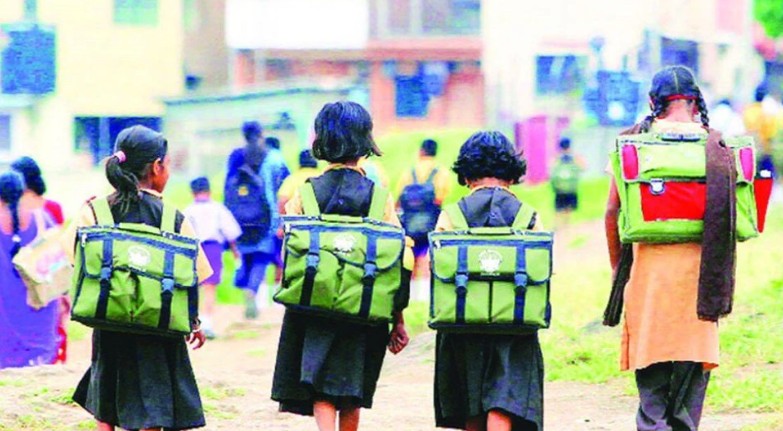
School principals to hoist the national flag following administrative delays.
The Flag Hoisting
The Navi Mumbai Municipal Corporation (NMMC) has cancelled invitations extended to newly elected corporators for Republic Day flag-hoisting ceremonies in civic schools this year, citing administrative and procedural delays.
Although the municipal elections have concluded, the first general body meeting of the newly elected corporators is yet to take place. In view of this, the NMMC education department has issued revised instructions for the January 26 celebrations across all municipal schools. As per the new directive, school principals will themselves conduct the flag-hoisting ceremonies, and corporators will not be invited to preside over the events.
Officials clarified that any earlier circulars or communications instructing schools to invite corporators should be treated as cancelled. In cases where invitation letters have already been sent, school principals have been directed to inform the concerned corporators about the revised decision and explain the administrative reasons behind the change.
The move has been described as a temporary arrangement until formal procedures related to the newly elected body are completed. The education department has emphasized that the decision is purely administrative and not political in nature.
Despite the change, the NMMC has instructed all schools to ensure that Republic Day celebrations are conducted with full enthusiasm, discipline and respect for national values. Principals have been asked to strictly adhere to the guidelines and ensure smooth conduct of the programme.
The decision has drawn attention as it comes soon after the municipal elections, highlighting the impact of procedural delays on official civic events.
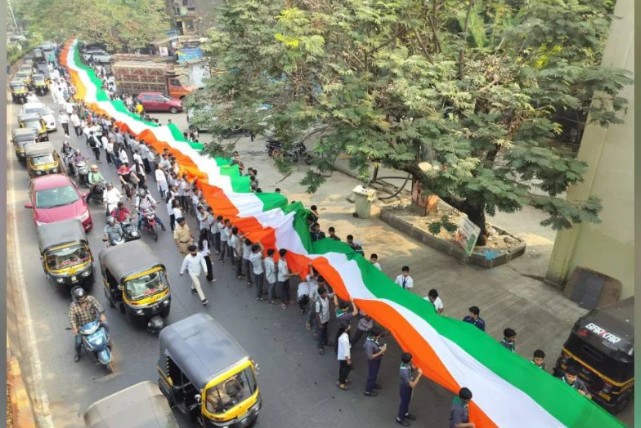
ABVP initiative sees thousands of students participate spontaneously ahead of Republic Day.
The Initiative
Patriotic fervour gripped Navi Mumbai as the Akhil Bharatiya Vidyarthi Parishad (ABVP) organised a massive 1,111-feet-long Tricolor Yatra, witnessing spontaneous participation from thousands of students and citizens on the eve of Republic Day.
The yatra was held as part of Youth Week celebrations and to mark the birth anniversary of Netaji Subhas Chandra Bose, with the objective of inspiring nationalism, unity and social responsibility among the youth. Students marched proudly while holding the enormous national flag, raising slogans such as “Bharat Mata Ki Jai,” “Vande Mataram” and “Jai Hind,” creating an atmosphere charged with patriotic emotion.
The rally began at Blue Diamond Chowk, Vashi, and culminated at Rajiv Gandhi College of Arts, Commerce and Science, Sector 10A, where a short programme was organised. Speakers highlighted the role of students in nation-building and appealed to the youth to actively contribute to society beyond academics.
Prominent attendees included ABVP state minister Rahul Rajoria, sports coordinator Arpita Malik, and college principal Dr Basukinath Pandey, who praised the enthusiasm and discipline shown by the participants. They urged students to uphold constitutional values and remain socially responsible citizens.
The event’s smooth execution was attributed to the efforts of Dr Akshay Shet and more than 100 volunteers. Participants and local residents said the Tricolor Yatra strengthened the sense of unity and national pride, making it a memorable and inspiring pre-Republic Day event for Navi Mumbai.
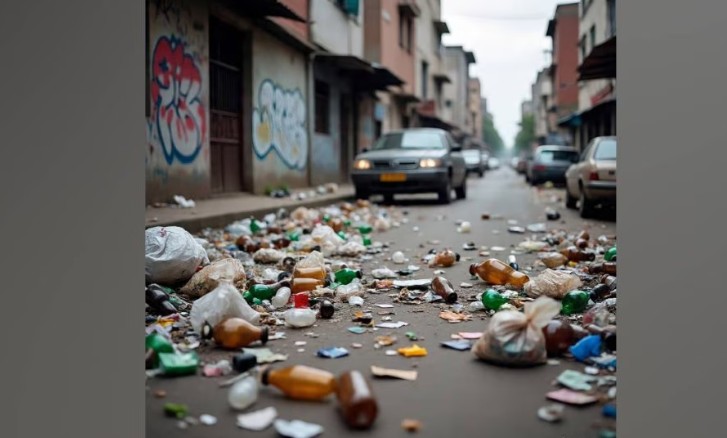
With the Uran civic elections approaching, local residents and political observers are raising serious concerns about the persistent garbage problem across the area. Overflowing waste on main roads and traffic lanes has emerged as a key issue in the election campaign, with voters expressing frustration over poor civic management.
Several key thoroughfares in Uran, especially around busy intersections and residential localities, have been seen strewn with garbage that has not been collected for days. Piles of waste are causing traffic disruptions, foul odour and unhygienic conditions, prompting complaints from commuters, shopkeepers and local residents.
Civic activists and opposition leaders have criticised the local administration for its failure to ensure regular garbage collection and proper waste disposal. They say that poor sanitation has not only affected the appearance of the town but also posed health risks, especially during peak summer months.
Residents pointed out that despite repeated assurances from officials, garbage is frequently left uncollected in several areas, leading to water logging and breeding of insects. Many voters have highlighted this issue as a priority concern affecting their daily lives and have demanded immediate action from authorities.
Political parties contesting the Uran elections have responded by promising stricter monitoring of waste collection, improvement in street cleaning, and deployment of more resources for solid waste management.
As election day approaches, garbage disposal and civic cleanliness have become central themes in public discussions, reflecting growing citizen demand for improved basic services and accountable governance.

Navi Mumbai Cancels Invitations to Newly Elected Corporators for Republic Day Ceremonies

1111-Feet Tricolor Yatra Fills Navi Mumbai with Patriotic Zeal

Garbage Piles Become Major Issue Ahead of Uran Elections

Nidhi Razdan, fake Harvard professorship, and here is the explanation through her blog.

As the arrangement with Prashant Kishor falls through Rahul Gandhi has gone overseas again and is uncontactable

BSNL reveals all new 4G plans starting at ₹16

-
 Fact Check5 years ago
Nidhi Razdan, fake Harvard professorship, and here is the explanation through her blog.
-
 India4 years ago
As the arrangement with Prashant Kishor falls through Rahul Gandhi has gone overseas again and is uncontactable
-
 Technology4 years ago
BSNL reveals all new 4G plans starting at ₹16
-

 Latest News5 years ago
Government has spent ₹9,725 crores on Covid-19 vaccination drive so far
-

 Latest News4 years ago
Tata wins Air India with ₹18,000 crore bid
-

 Latest News4 years ago
Jharkhand government cuts Petrol price by massive ₹25 a litre but with a catch
-

 Latest News5 years ago
Raj Kundra Gave ₹25 Lakh Bribe to Mumbai Crime Branch to Avoid Arrest
-

 Navi Mumbai5 years ago
Navi Mumbai civic body raids and tests morning walkers, many found COVID positive