
Latest News
Delhi government was alleging inadequate oxygen supply but data shows it was returning oxygen to suppliers

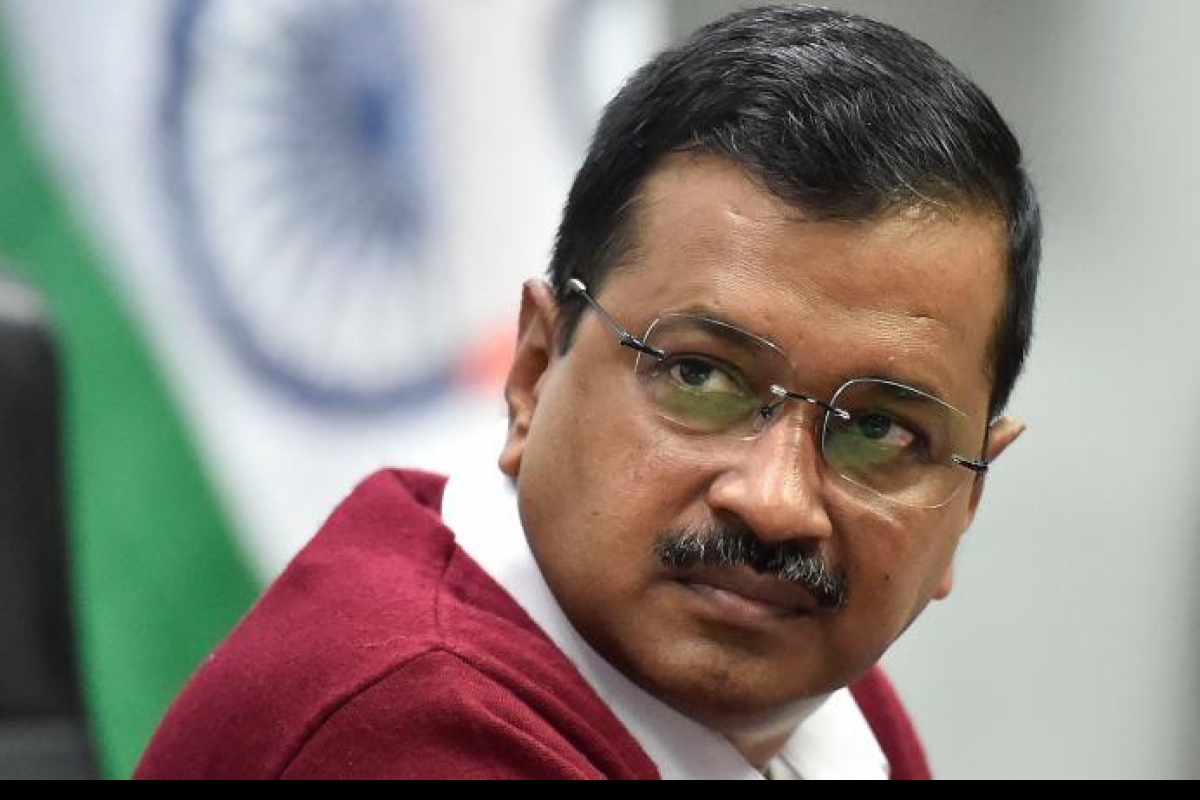
Arvind Kejriwal-led Delhi government was alleging till yesterday that it was not getting adequate oxygen from other states to meet its demand but a study done by the Petroleum & Explosives Safety Organisation (PESO) under the government of India has revealed that it was actually getting more oxygen than it needed.
While today the Delhi govt said that its oxygen demand has suddenly dropped to 582 MT per day despite the number of active Covid-19 cases dropping only marginally, it was demanding 700 MT per day till yesterday, while saying that the state deserves 976 MT as per central govt calculations. The courts also had agreed to this demand, with the Delhi High Court threatening to file a contempt of court case against the central govt if Delhi does not receive 700 MT oxygen per day. It is interesting to note that Delhi’s oxygen came down after the Supreme Court ordered an audit of oxygen used by various states, which the Delhi govt was vehemently opposing in the court.
But now it has been revealed that Delhi’s actual demand was much less than what the government was demanding, and they had to ask the suppliers to take back oxygen and store it in their tanks as Delhi hospitals don’t have large storage tanks to keep the excess oxygen. According to a report on daily Liquid Medical Oxygen (LMO) supply to Delhi prepared by PESO, oxygen suppliers were asked to store Delhi’s allocated oxygen in their tanks on multiple occasions in this month.
For the study, stock data of Liquid Medical Oxygen (LMO) were collected from 45-64 hospitals out of 68 hospitals situated in Delhi and having Liquid Medical Oxygen (LMO) storage tanks, and also from 11 oxygen cylinder re-fillers having LMO tanks. The study revealed that on both 9th and 10th May, the hospitals in Delhi had oxygen stock for 12 hours to 24 hours. The oxygen stock in the hospitals ranged from 309 MT to 477 MT. Stock in the tanks of the re-fillers ranged from 39% to 74% of their total storage capacity.




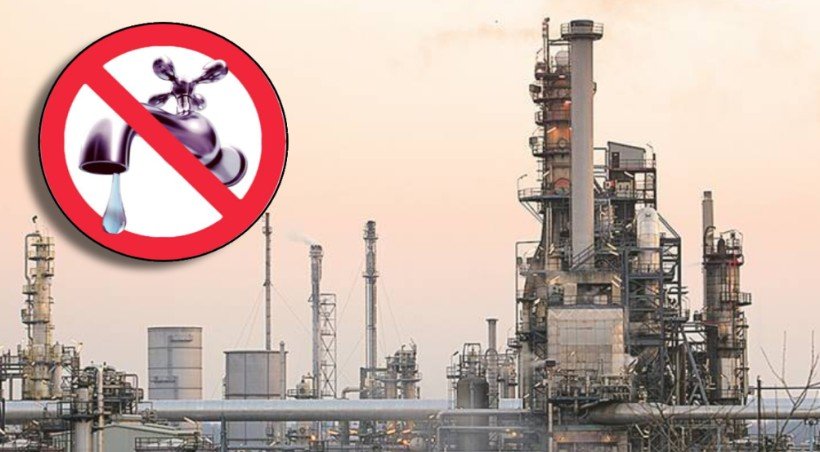
Manufacturers seek a reduction to 24 hours, citing production losses and water wastage caused by pipeline leakages.
The Demand
Industrialists in the Taloja Maharashtra Industrial Development Corporation (MIDC) area have opposed the proposed 36-hour water supply shutdown and announced a protest march on October 29 to demand a shorter disruption.
The Taloja Manufacturers’ Association (TMA) and Taloja Industries Association (TIA) have called for the protest outside the MIDC water supply office at 1 pm. They have urged the authorities to reduce the shutdown period from 36 hours to 24 hours. Industrialists said the extended water cut, along with the time required to restore normal supply, could disrupt factory operations for nearly 48 hours. The disruption could affect production, employment and industrial safety, particularly in chemical units that depend on a regular water supply.
MIDC has reportedly planned the shutdown due to concerns over water availability from Barvi Dam and the need to manage limited resources. However, industry representatives argue that the authorities should first address water wastage caused by leaking pipelines and unauthorised connections. According to the TMA, nearly 8 million litres of water are wasted daily in Taloja due to these issues.
The associations have demanded urgent pipeline repairs, action against unauthorised connections and alternatives such as supplying water at reduced pressure instead of imposing a complete shutdown. TMA president Shekhar Shringare warned that the protest could be intensified if the authorities fail to address the industry’s concerns. A meeting with MIDC officials was scheduled for October 27 to discuss the demands and explore possible solutions.
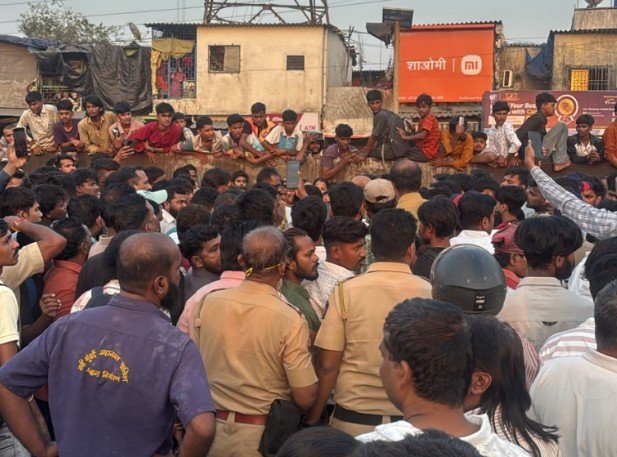
Fatal accident sparks road blockade as locals demand urgent pedestrian safety measures and completion of long-pending project.
The Protest
A 50-year-old woman died after being hit by a Brihanmumbai Municipal Corporation (BMC) garbage truck near Turbhe railway station on Thane-Belapur Road on Monday evening, October 26. The incident triggered protests by local residents, who blamed the prolonged delay in completing the Turbhe Store flyover for the unsafe road conditions.
Following the accident, angry residents blocked the road and demanded immediate action from the authorities. They called for the completion of the flyover and the construction of a temporary footbridge to ensure pedestrian safety until the project is completed. Police intervened, and traffic was subsequently restored.
The flyover project was approved by the Navi Mumbai Municipal Corporation (NMMC) in 2019 to ease traffic congestion and improve safety in the area. However, construction has been delayed due to issues involving underground MIDC sewage pipelines, design changes and administrative hurdles.
Residents said the busy stretch poses a serious risk to pedestrians, including workers, students and senior citizens who cross the road daily. According to locals, 23 people have died and more than 50 have been injured in accidents in the area over the past decade.
The latest fatal accident has once again raised concerns over road safety and the lack of adequate pedestrian crossing facilities.
Residents have urged the civic authorities to expedite the flyover work and introduce immediate safety measures to prevent further loss of life. They said temporary arrangements are urgently needed while the long-pending project remains incomplete.
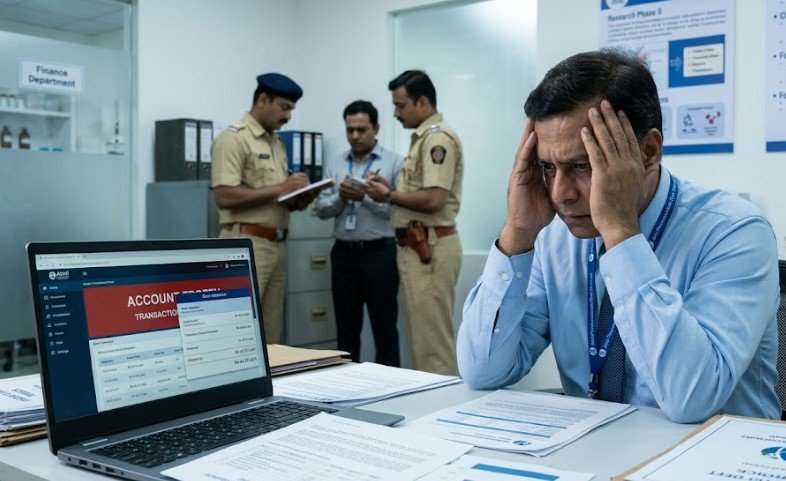
Vashi Police book two accused for allegedly promising Rs 100–200 crore investment to expand business.
The Scam
A pharmaceutical chemicals company has allegedly been cheated of Rs 40.20 lakh by two people who promised to invest Rs 100 crore to Rs 200 crore to support its business expansion. Vashi Police have registered a case against Pooja Umak and a person identified as Chirag, who allegedly posed as financial consultants and collected money under the pretext of consultancy fees, project report modifications and other business formalities. Police are searching for the accused.
According to the complaint, Ashwani Kumar Singh (52), vice-chairman of Embellish Pharmatech Pvt Ltd and a resident of Roorkee, Uttarakhand, was approached by Umak on May 14, 2026, when he was in Vashi for work. She allegedly claimed to represent Fluidmaster India Pvt Ltd and expressed interest in investing Rs 100 crore to Rs 200 crore in his company.
Umak later visited the company’s premises in Haridwar for an inspection, with Singh arranging her air ticket. She allegedly demanded money on several occasions for consultancy services and project-related procedures.
During a subsequent visit to Delhi, Umak introduced Singh to Chirag, claiming he managed the company’s Indian operations while its chairman was based abroad. Trusting their assurances, Singh allegedly transferred a total of Rs 40.20 lakh to various bank accounts. However, the promised investment never materialised, and the accused allegedly avoided his requests for a meeting with the chairman.
After suspecting fraud, Singh approached the cybercrime helpline and later filed a complaint with Vashi Police. A case has been registered under Sections 318(4), 319(2) and 3(5) of the Bharatiya Nyaya Sanhita and Section 66D of the Information Technology Act. Further investigation is underway under Senior Police Inspector Shashikant Chandekar.

Taloja Industrialists Protest 36-Hour Water Cut, Demand Shorter Shutdown

Woman Killed by Garbage Truck in Turbhe, Residents Protest Delayed Flyover

Pharmaceutical Company Cheated of Rs 40.20 Lakh in Investment Scam

Nidhi Razdan, fake Harvard professorship, and here is the explanation through her blog.

As the arrangement with Prashant Kishor falls through Rahul Gandhi has gone overseas again and is uncontactable

BSNL reveals all new 4G plans starting at ₹16

-
 Fact Check6 years ago
Nidhi Razdan, fake Harvard professorship, and here is the explanation through her blog.
-
 India5 years ago
As the arrangement with Prashant Kishor falls through Rahul Gandhi has gone overseas again and is uncontactable
-
 Technology5 years ago
BSNL reveals all new 4G plans starting at ₹16
-

 Latest News5 years ago
Government has spent ₹9,725 crores on Covid-19 vaccination drive so far
-

 Latest News5 years ago
Tata wins Air India with ₹18,000 crore bid
-

 Latest News5 years ago
Jharkhand government cuts Petrol price by massive ₹25 a litre but with a catch
-

 Latest News5 years ago
Raj Kundra Gave ₹25 Lakh Bribe to Mumbai Crime Branch to Avoid Arrest
-

 Navi Mumbai5 years ago
Navi Mumbai civic body raids and tests morning walkers, many found COVID positive