
Latest News
Three resolutions on the refugee crisis in Ukraine

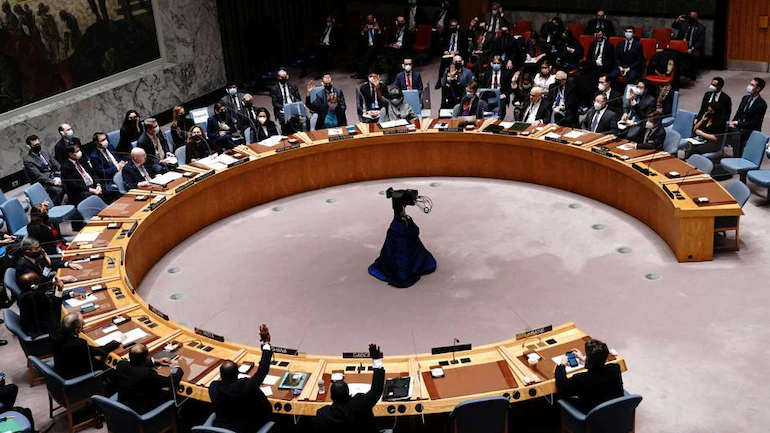
Following Russia’s decision to push for a vote on a Security Council resolution that makes no mention of its attack on its smaller neighbor, the United Nations will face three resolutions on the increasing humanitarian situation in Ukraine on Wednesday.
The United Nations General Assembly is set to begin debating two competing resolutions on Wednesday morning: one backed by Ukraine and Western nations that explicitly blames Russia for the increasing humanitarian situation, and the other sponsored by South Africa that does not.
The third resolution, sponsored by Russia and severely criticized for failing to mention its invasion of Ukraine, will be voted on by the Security Council. . Last Friday, Russia called off a council vote on the measure because diplomats expected it would be massively defeated, with many abstentions and few “yes” votes, while at least nine votes are required for approval and no vetoes.
Dmitry Polyansky, Russia’s deputy UN ambassador, informed reporters on Tuesday that Russia has requested a vote on Wednesday. It was set to take place following the Security Council’s planned discussion on cooperation with the Arab League on Wednesday morning.
Polyansky stated that if Western countries do not support the Russian resolution, it will be a “reflection of their dishonesty” and refusal to support a purely humanitarian action “without any politicization,” as prior humanitarian resolutions issued by the 15-member council have been.
Russia canceled Friday’s vote on its resolution “because they recognized they didn’t have support for that resolution,” according to US Ambassador Linda Thomas-Greenfield. She stated that there is still no support.
After Russia made it obvious after two weeks of deliberations in the Security Council that it would veto their text, France and Mexico decided to take their humanitarian resolution to the 193-member General Assembly. The humanitarian situation is linked to Russia’s invasion of Ukraine.
The two nations, along with 20 others, including Ukraine and the United States, wrote to the assembly president on Monday, requesting that the extraordinary session of the General Assembly be reconvened on Wednesday to vote on the resolution.
South Africa circulated a competing draught resolution on Monday that is identical to the Russian language before the Security Council but does not name Russian aggression. On Tuesday, it was transmitted to the United Nations General Assembly.
As a first step toward improving the deteriorating humanitarian situation, the South African draught calls for “immediate suspension of hostilities” and urges “political engagement, talks, mediation, and other peaceful means aimed at attaining sustainable peace.”
According to a list of speakers acquired by The Associated Press on Tuesday night, 61 countries intended to address the assembly on the topic. As a result, the vote could take place either Wednesday evening or Thursday morning.
Ukraine and South Africa were the first two speakers, each presenting the Western-backed resolution they support and helped design. Although Security Council resolutions, General Assembly resolutions are not legally enforceable, they do have strength in terms of representing international opinion because they lack veto power.
Supporters of the French-Mexican resolution hoped to garner the same vote for the draught as they did for a resolution passed by the assembly on March 2 that demanded an immediate end to Russia’s military operations in Ukraine and the departure of all Russian forces. Supporters welcomed the resolution as proof of Russia’s global isolation as it passed 141-5 with 35 abstentions.
“Russia is the offender here, and it is outrageous for Russia to believe it can bring up a humanitarian settlement,” Thomas-Greenfield said. “Russia needs to stop fighting.” It must halt the slaughter of Ukrainians. It must cease targeting civilians and evicting people from their homes, resulting in a humanitarian disaster.”
The French-Mexican draught resolution reiterates the March 2 demand that Russia ceases its military offensive in Ukraine and evacuate all soldiers, as well as protection for all people and critical infrastructure.
The proposal condemns Russia’s action against Ukraine, claiming that the “dire humanitarian repercussions” are “on a magnitude that the world community has not seen in Europe in decades.” It also condemns Russia’s shelling, bombing, and “besiegement” of highly populated cities, especially Mariupol in the south.
The draught resolution expresses strong opposition to assaults on people and “civilian objects,” such as evacuation convoys, and calls on all parties to “protect civilians escaping armed conflict and violence.”It also necessitates that assistance workers have unrestricted access to their transportation, supplies, and equipment.
Russia’s suggested humanistic resolution, which was distributed a day after France and Mexico announced that their text will be presented to the UN General Assembly, makes no mention of the war. It simply asks for the protection of civilians “in vulnerable situations” as well as safe passage for humanitarian aid and individuals fleeing Ukraine.
It supports UN Secretary-General Antonio Guterres’ appeal for engagement and negotiations, as well as a negotiated cease-fire that allows “all civilians” to be evacuated quickly.
Russia’s plan goes on to declare that “the parties concerned must agree on humanitarian pauses to this aim,” but never names the parties involved. Russian authorities assert that they did not initiate the conflict, and they have wrongly dismissed reports of Russian military defeats or civilian deaths in Ukraine. Russian forces, according to state media and government authorities, are only targeting military targets.




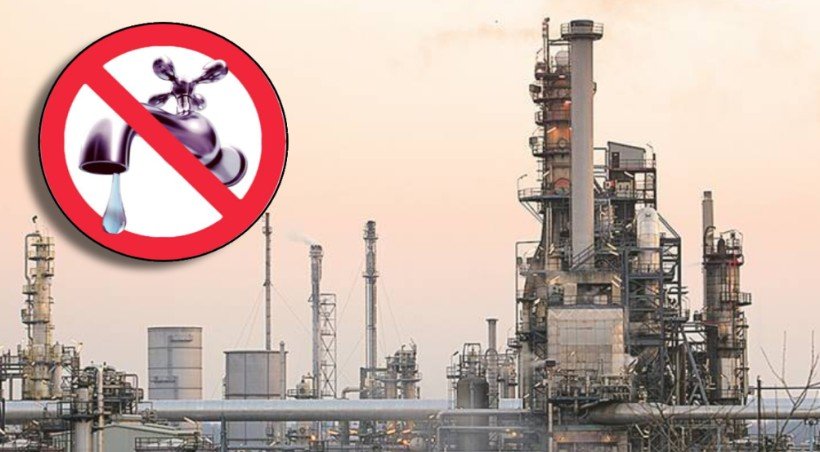
Manufacturers seek a reduction to 24 hours, citing production losses and water wastage caused by pipeline leakages.
The Demand
Industrialists in the Taloja Maharashtra Industrial Development Corporation (MIDC) area have opposed the proposed 36-hour water supply shutdown and announced a protest march on October 29 to demand a shorter disruption.
The Taloja Manufacturers’ Association (TMA) and Taloja Industries Association (TIA) have called for the protest outside the MIDC water supply office at 1 pm. They have urged the authorities to reduce the shutdown period from 36 hours to 24 hours. Industrialists said the extended water cut, along with the time required to restore normal supply, could disrupt factory operations for nearly 48 hours. The disruption could affect production, employment and industrial safety, particularly in chemical units that depend on a regular water supply.
MIDC has reportedly planned the shutdown due to concerns over water availability from Barvi Dam and the need to manage limited resources. However, industry representatives argue that the authorities should first address water wastage caused by leaking pipelines and unauthorised connections. According to the TMA, nearly 8 million litres of water are wasted daily in Taloja due to these issues.
The associations have demanded urgent pipeline repairs, action against unauthorised connections and alternatives such as supplying water at reduced pressure instead of imposing a complete shutdown. TMA president Shekhar Shringare warned that the protest could be intensified if the authorities fail to address the industry’s concerns. A meeting with MIDC officials was scheduled for October 27 to discuss the demands and explore possible solutions.
Fatal accident sparks road blockade as locals demand urgent pedestrian safety measures and completion of long-pending project.
The Protest
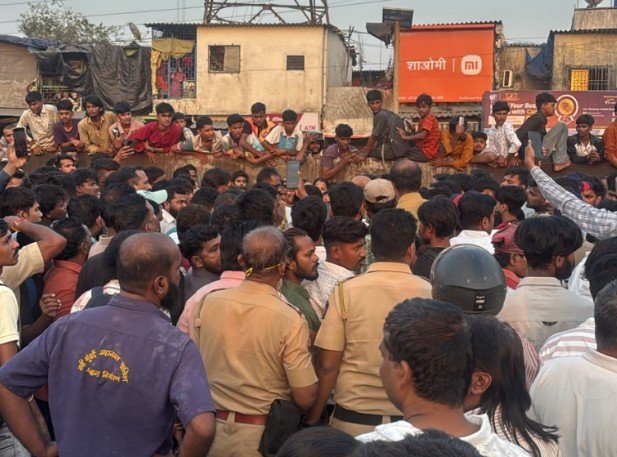
A 50-year-old woman died after being hit by a Brihanmumbai Municipal Corporation (BMC) garbage truck near Turbhe railway station on Thane-Belapur Road on Monday evening, October 26. The incident triggered protests by local residents, who blamed the prolonged delay in completing the Turbhe Store flyover for the unsafe road conditions.
Following the accident, angry residents blocked the road and demanded immediate action from the authorities. They called for the completion of the flyover and the construction of a temporary footbridge to ensure pedestrian safety until the project is completed. Police intervened, and traffic was subsequently restored.
The flyover project was approved by the Navi Mumbai Municipal Corporation (NMMC) in 2019 to ease traffic congestion and improve safety in the area. However, construction has been delayed due to issues involving underground MIDC sewage pipelines, design changes and administrative hurdles.
Residents said the busy stretch poses a serious risk to pedestrians, including workers, students and senior citizens who cross the road daily. According to locals, 23 people have died and more than 50 have been injured in accidents in the area over the past decade.
The latest fatal accident has once again raised concerns over road safety and the lack of adequate pedestrian crossing facilities.
Residents have urged the civic authorities to expedite the flyover work and introduce immediate safety measures to prevent further loss of life. They said temporary arrangements are urgently needed while the long-pending project remains incomplete.
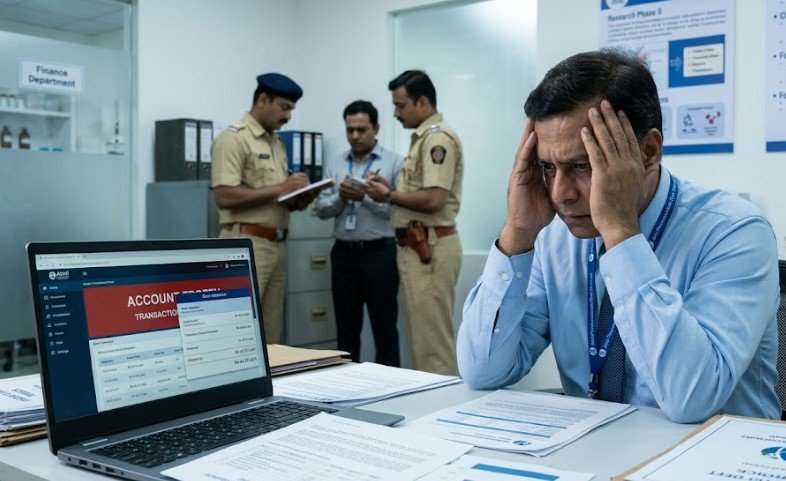
Vashi Police book two accused for allegedly promising Rs 100–200 crore investment to expand business.
The Scam
A pharmaceutical chemicals company has allegedly been cheated of Rs 40.20 lakh by two people who promised to invest Rs 100 crore to Rs 200 crore to support its business expansion. Vashi Police have registered a case against Pooja Umak and a person identified as Chirag, who allegedly posed as financial consultants and collected money under the pretext of consultancy fees, project report modifications and other business formalities. Police are searching for the accused.
According to the complaint, Ashwani Kumar Singh (52), vice-chairman of Embellish Pharmatech Pvt Ltd and a resident of Roorkee, Uttarakhand, was approached by Umak on May 14, 2026, when he was in Vashi for work. She allegedly claimed to represent Fluidmaster India Pvt Ltd and expressed interest in investing Rs 100 crore to Rs 200 crore in his company.
Umak later visited the company’s premises in Haridwar for an inspection, with Singh arranging her air ticket. She allegedly demanded money on several occasions for consultancy services and project-related procedures.
During a subsequent visit to Delhi, Umak introduced Singh to Chirag, claiming he managed the company’s Indian operations while its chairman was based abroad. Trusting their assurances, Singh allegedly transferred a total of Rs 40.20 lakh to various bank accounts. However, the promised investment never materialised, and the accused allegedly avoided his requests for a meeting with the chairman.
After suspecting fraud, Singh approached the cybercrime helpline and later filed a complaint with Vashi Police. A case has been registered under Sections 318(4), 319(2) and 3(5) of the Bharatiya Nyaya Sanhita and Section 66D of the Information Technology Act. Further investigation is underway under Senior Police Inspector Shashikant Chandekar.

Taloja Industrialists Protest 36-Hour Water Cut, Demand Shorter Shutdown

Woman Killed by Garbage Truck in Turbhe, Residents Protest Delayed Flyover

Pharmaceutical Company Cheated of Rs 40.20 Lakh in Investment Scam

Nidhi Razdan, fake Harvard professorship, and here is the explanation through her blog.

As the arrangement with Prashant Kishor falls through Rahul Gandhi has gone overseas again and is uncontactable

BSNL reveals all new 4G plans starting at ₹16

-
 Fact Check6 years ago
Nidhi Razdan, fake Harvard professorship, and here is the explanation through her blog.
-
 India5 years ago
As the arrangement with Prashant Kishor falls through Rahul Gandhi has gone overseas again and is uncontactable
-
 Technology5 years ago
BSNL reveals all new 4G plans starting at ₹16
-

 Latest News5 years ago
Government has spent ₹9,725 crores on Covid-19 vaccination drive so far
-

 Latest News5 years ago
Tata wins Air India with ₹18,000 crore bid
-

 Latest News5 years ago
Jharkhand government cuts Petrol price by massive ₹25 a litre but with a catch
-

 Latest News5 years ago
Raj Kundra Gave ₹25 Lakh Bribe to Mumbai Crime Branch to Avoid Arrest
-

 Navi Mumbai5 years ago
Navi Mumbai civic body raids and tests morning walkers, many found COVID positive