
Media
The Kharghar Hill Festival will be held in Navi Mumbai


The city is preparing to observe International Mountain Day on December 10 and 11 in order to raise awareness of the importance of protecting hills. Local environmental enthusiasts are in charge of planning the Kharghar Hill Festival. The message to conserve the hills and wildlife will be written on a record-breaking vertical banner that stands 100 metres tall and 6 metres wide. According to Jyoti Nadkarni of the Kharghar Hill and Wetlands forum, the main goal of the initiative is to draw attention to the deforestation of our hills and the necessity of protecting them for both the current and future generations.
Development cannot be avoided, but the process must be sustainable, she said. As Nadkarni said, “We are eager to break records while erecting a huge vertical banner on this day to garner public attention and promote the message to care for our hills, which are being destroyed in the guise of beautifying, quarrying, and for producing concrete jungles. Due to careless quarrying or unregulated forest fires, environmentalists have been voicing concerns about the Kharghar Hills, which extend from Belapur to Taloja. According to environmentalist BN Kumar of the NatConnect Foundation, the Kharghar Hills feature a huge and dynamic biodiversity that is presently under jeopardy due to development there.
The main event will take held at Pandav Kada View Point, next to the golf course and Gurdwara. This strategy is currently in cold storage. BNHS has designed a Nature Park in the Kharghar Hills at Cidco’s request.
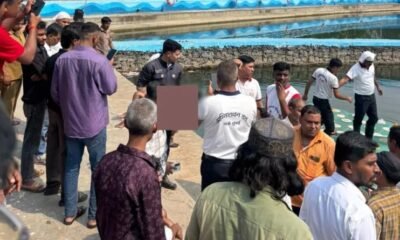




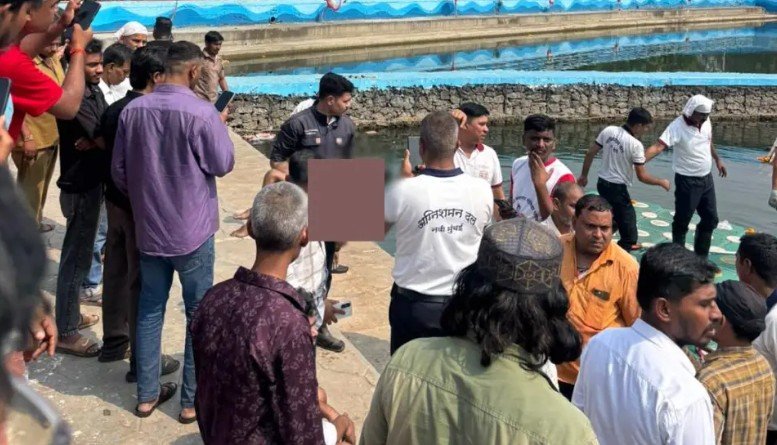
The boys, aged 10 and 12, reportedly entered the water to collect coins thrown during post-Navratri immersion rituals, raising concerns over safety measures.
The Case
Two children drowned in a pond at Kopri village in Vashi while reportedly trying to collect coins thrown into the water during immersion rituals following Navratri celebrations.
The victims were identified as Golu Mansuri, 10, and Ganesh Gupta, 12. According to preliminary information, the boys entered the pond with their friends to retrieve coins offered during the immersion of Goddess Durga idols and ceremonial pots.
The children reportedly misjudged the depth of the water and drowned. After receiving information about the incident, police and fire brigade personnel reached the spot and launched a rescue operation. The boys were recovered from the pond and taken to a civic hospital in Vashi.
The tragic incident has raised concerns about safety arrangements at the pond, particularly during festival-related immersion activities when people gather in the area.
Local residents have reportedly expressed concern over children entering the water despite the risks. They have also called for security guards to be deployed at the site to prevent people, especially minors, from entering the pond unsupervised.
Residents have urged the authorities to strengthen safety measures and ensure better supervision around the water body to prevent similar tragedies.
The incident highlights the dangers of entering ponds to retrieve coins or other objects without knowing the water’s depth. Authorities are being urged to take preventive steps to protect children and other visitors, especially during festivals and immersion ceremonies.
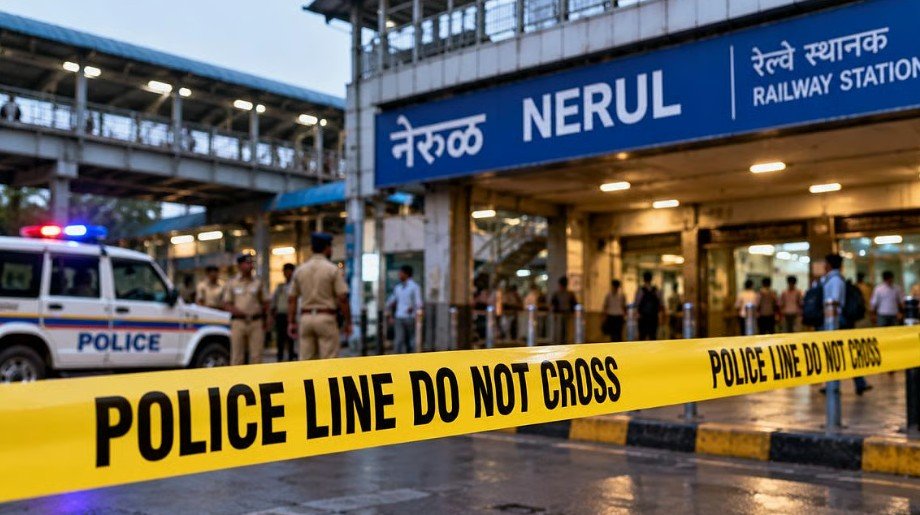
Police to convert attempted murder case into murder after woman succumbs to injuries, accused boyfriend arrested.
The Attack
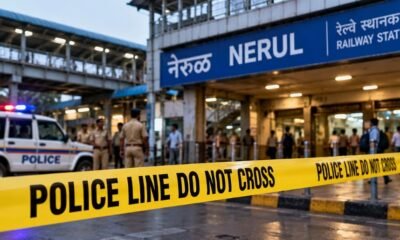
A 21-year-old woman working as ground staff at Navi Mumbai International Airport died on Wednesday after allegedly being stabbed multiple times by her boyfriend near Nerul railway station. Following her death, Nerul police will convert the attempted murder case into a murder case.
The victim, Sadiya Jahir Shaikh, was reportedly attacked by her boyfriend, Danish Mohammed Ansari, 27, on Monday morning while she was on her way to work. According to the police, the accused allegedly followed her to the area outside the eastern entrance of Nerul railway station and attacked her with a knife near a bus stop at around 6:45 am.
Shaikh sustained multiple injuries to her chest, abdomen, neck and back. She was rushed to a civic hospital in Vashi and admitted to the intensive care unit. However, she succumbed to her injuries on Wednesday.
Police said the couple had reportedly been in a relationship for around four years and had planned to marry. However, tensions allegedly developed after Ansari began suspecting her of being involved with another man.
According to reports, the accused had allegedly harassed and assaulted Shaikh earlier, and complaints had been registered against him at two police stations. Ansari was arrested within hours of the attack. Following the victim’s death, police are taking steps to add murder charges to the case. Further investigation is underway.
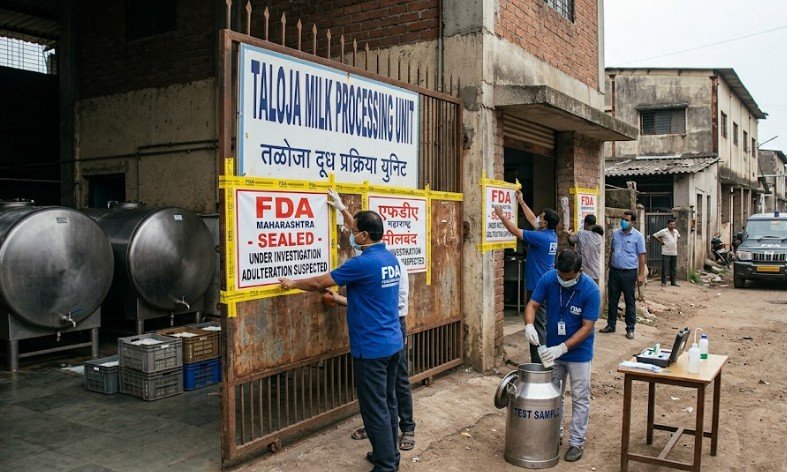
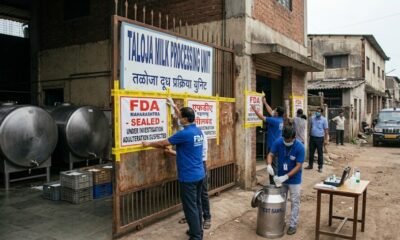
Authorities destroy 1,494 litres of suspected adulterated milk and register a criminal case against six people following inspections in Panvel.
The Adulteration
The Food and Drug Administration (FDA) has suspended the licences of three dairy units in the Taloja industrial area of Panvel following inspections that reportedly revealed violations of food safety and hygiene standards. The action was taken against Mateshwari Foods, Sawariya Milk and Milk Products, and Royal Foods, located in Balaji Industrial Park, Taloja.
During the inspection, FDA officials destroyed 1,494 litres of suspected adulterated milk and seized curd for further examination. Samples have been sent for laboratory testing, and further action will depend on the test results. A criminal case has also been registered against six people at Taloja police station. They are accused of involvement in the production, storage and sale of adulterated food products, raising concerns about the safety of dairy products supplied to consumers.
The FDA’s action highlights the importance of maintaining proper hygiene and following food safety regulations in dairy processing units. Authorities are investigating the matter, and further steps may be taken based on the findings. The incident has also raised concerns about the quality of milk and milk products available in the market, underlining the need for regular inspections to protect public health.

Two Children Drown in Vashi Pond While Collecting Immersion Coins

NMMC Launches 59 Urban Health Centres Across Navi Mumbai

Maharashtra Government Lifts Stay on Five Navi Mumbai Cluster Redevelopment Projects

Nidhi Razdan, fake Harvard professorship, and here is the explanation through her blog.

As the arrangement with Prashant Kishor falls through Rahul Gandhi has gone overseas again and is uncontactable

BSNL reveals all new 4G plans starting at ₹16

-
 Fact Check6 years ago
Nidhi Razdan, fake Harvard professorship, and here is the explanation through her blog.
-
 India4 years ago
As the arrangement with Prashant Kishor falls through Rahul Gandhi has gone overseas again and is uncontactable
-
 Technology5 years ago
BSNL reveals all new 4G plans starting at ₹16
-

 Latest News5 years ago
Government has spent ₹9,725 crores on Covid-19 vaccination drive so far
-

 Latest News5 years ago
Tata wins Air India with ₹18,000 crore bid
-

 Latest News5 years ago
Jharkhand government cuts Petrol price by massive ₹25 a litre but with a catch
-

 Latest News5 years ago
Raj Kundra Gave ₹25 Lakh Bribe to Mumbai Crime Branch to Avoid Arrest
-

 Navi Mumbai5 years ago
Navi Mumbai civic body raids and tests morning walkers, many found COVID positive