
Latest News
NMMC to Assess Civic Readiness as Cluster Redevelopment Takes Off in Navi Mumbai

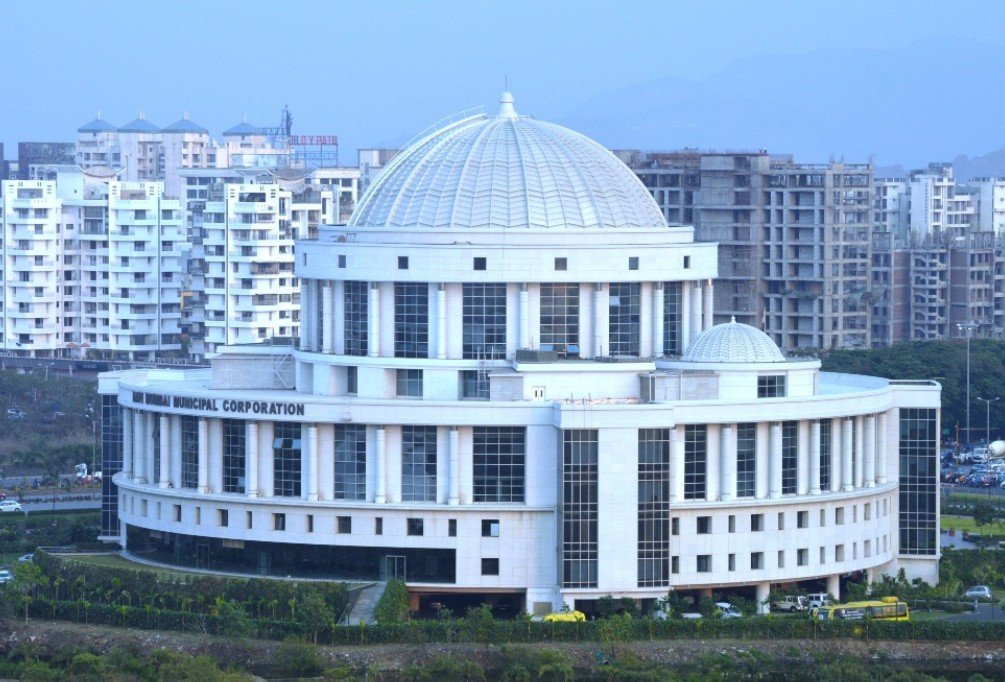
City body commissions an impact assessment study to ensure infrastructure, traffic networks, and water supply keep pace with upcoming high-density housing projects.
The Redevelopment
As Navi Mumbai prepares for a major urban face-lift, the Navi Mumbai Municipal Corporation (NMMC) is stepping back to look at the bigger picture. With several aging, dilapidated housing pockets set to undergo cluster redevelopment, civic officials have initiated a comprehensive impact assessment study to evaluate whether the city’s underlying infrastructure can support the incoming growth.
Unlike traditional building-by-building reconstruction, cluster redevelopment pulls together multiple adjacent structures to create larger, high-density residential complexes. While this gives long-time residents safer homes and modern amenities, it also dramatically increases the local population density.
The NMMC’s assessment will map out critical stress points across neighborhoods. Key areas of evaluation include whether existing water lines, sewage networks, storm-water drains, and power grids can handle the surge in demand. Analysts will also model traffic flow and parking needs to prevent severe bottlenecking along major feeder roads.
“Redevelopment shouldn’t just mean taller towers, it has to mean a better quality of life,” noted a senior NMMC official. “By assessing the load now, we can plan utility upgrades, expand public spaces, and improve road capacity before residents move into these new complexes.”
The study aims to establish a balanced blueprint for urban renewal ensuring that as Navi Mumbai grows upward, its essential civic foundations remain strong and reliable for every resident.





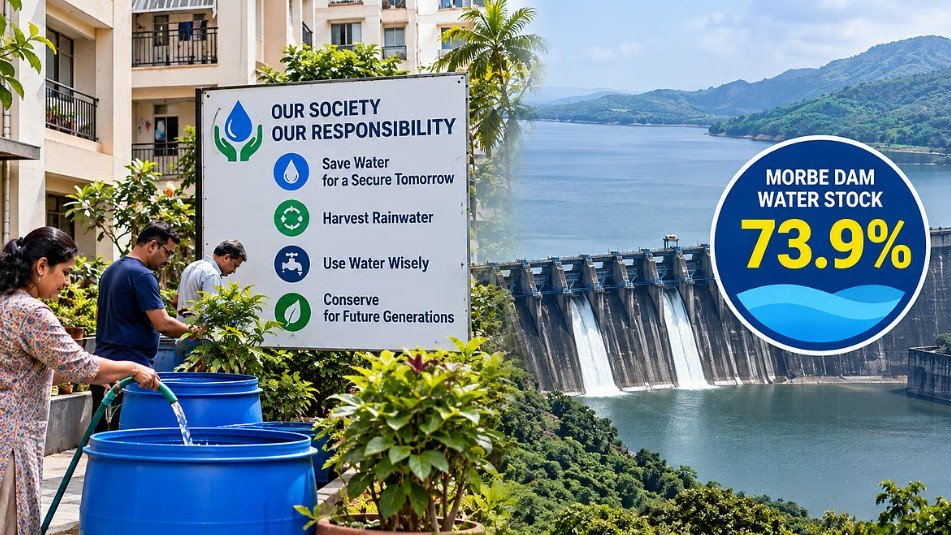
With Morbe Dam’s water stock at 73.9%, housing societies are adopting practical measures to reduce wastage and protect the city’s drinking water supply.
The Conservation
With water storage at Morbe Dam falling to 73.9%, housing societies across Navi Mumbai are stepping up conservation efforts to prevent unnecessary wastage and prepare for the coming months.
Several societies have introduced simple measures to reduce their dependence on the municipal water supply. These include using borewell water for non-drinking purposes, preventing tank overflows and encouraging residents to use water responsibly.
In Nerul, Bhimashankar Society has dug three borewells to provide water for activities such as vehicle washing and gardening. The society has 763 flats and 948 vehicles, making water conservation an important priority. In Belapur, Parsik Green Association is discouraging residents from washing cars with municipal drinking water. It is also monitoring storage tanks to prevent overflow and supports using treated wastewater for maintaining gardens.
Similarly, Samata Society in Sanpada has urged residents to be mindful of their daily water consumption, particularly while watering plants and using washing machines. The Navi Mumbai Municipal Corporation (NMMC) has also warned against using drinking water for vehicle washing and construction activities. Violators may face penalties and other action, including disconnection of the water supply.
The civic body has appealed to residents to repair leaking taps and pipelines, prevent water tanks from overflowing and avoid unnecessary consumption. As Morbe Dam remains the city’s main source of drinking water, the cooperation of housing societies and residents will be crucial in ensuring that available water is used wisely and the city’s supply remains secure.
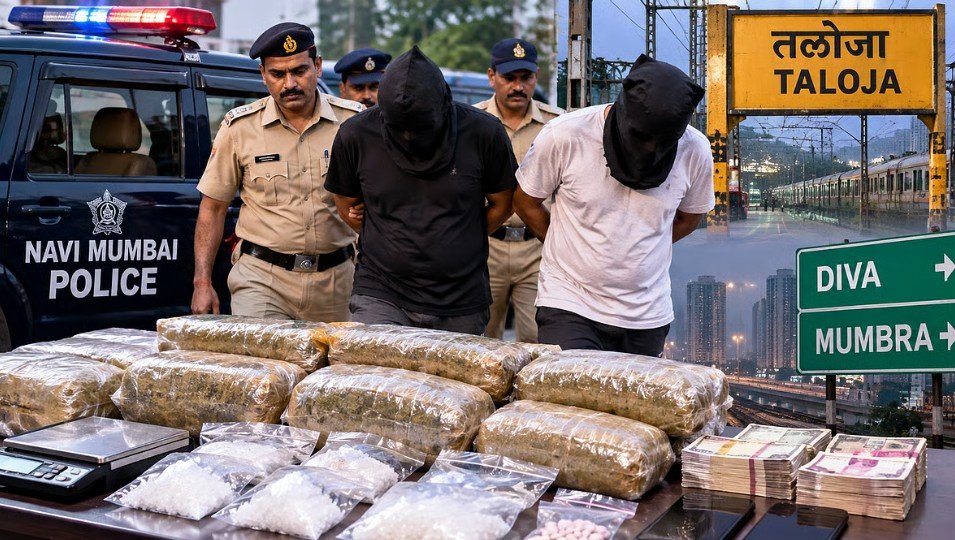
The latest arrests from Diva-Mumbra have helped investigators trace alleged drug supply links as police continue to probe the network and its financial transactions.
The Case
Navi Mumbai Police have arrested two more suspects in connection with a drug seizure worth Rs 3.57 crore in Taloja, taking the total number of arrests in the case to three.
The Anti-Narcotics Cell arrested Destiny Akachukwu Ugochukwu, 34, a Nigerian national, and Poonam Basnet, 30, from the Diva-Mumbra area on October 14. Police suspect that the two were linked to the supply network behind the seized drugs.
The investigation began on October 8, when officers arrested Ani Ikechukwu Darlington, 41, in Taloja. Police allegedly recovered 2.497 kg of mephedrone, commonly known as MD, and 566 grams of cocaine from his possession and residence. The seized drugs were valued at Rs 3.57 crore. Further questioning and investigation reportedly helped police trace the alleged supply links to the two newly arrested suspects.
Investigators are also examining financial transactions connected to the case. Police suspect that QR codes linked to a bank account may have been used to collect payments for drug deals. The two accused have been remanded to police custody for further questioning. Police are now working to identify the source of the drugs, their intended recipients and others who may have been involved in the alleged network. The investigation is ongoing, and officials are examining financial records and other evidence to establish the full extent of the suspected drug operation.
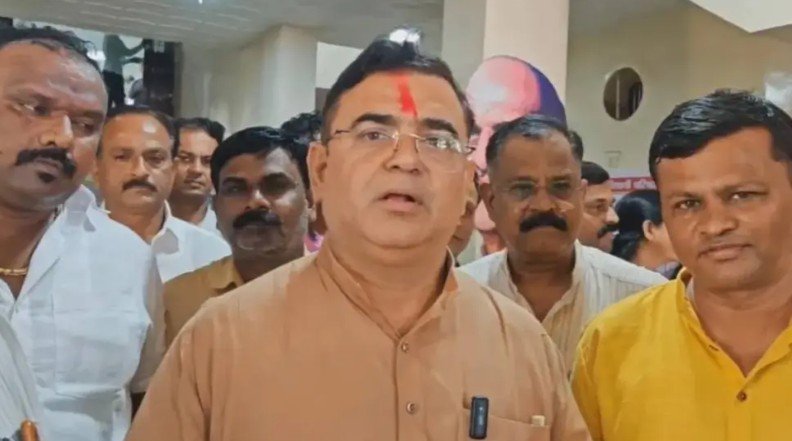
The decision aims to help farmers recover pending payments from traders, while a move towards digital transactions seeks to improve transparency in the market.
The Relief
In a major relief for farmers, the Mumbai Agricultural Produce Market Committee (APMC) has removed the six-month deadline for filing complaints against traders over unpaid dues and other irregularities. The decision was taken at an executive board meeting on October 15, chaired by Maharashtra Marketing Minister and APMC Chairman Jaykumar Rawal.
Earlier, farmers had to file complaints within six months if traders failed to pay them for their produce or if they faced issues related to weighing. Those who missed the deadline often found it difficult to recover their money. With the new decision, farmers will be able to approach the market committee even after six months, giving them another opportunity to seek justice and recover long-pending payments.
The minister emphasised that recovering farmers’ outstanding dues would remain a priority. Officials will also examine questionable transactions and transfers carried out without the required approvals. In another step towards improving transparency, the APMC has directed officials to begin digitizing market transactions within seven days. Banks, including HDFC and ICICI, are being approached to suggest suitable digital systems.
The proposed digital system is expected to make transactions easier to monitor and help reduce irregularities in the market. The removal of the deadline is expected to benefit farmers who have struggled to recover their payments. However, the effectiveness of the move will ultimately depend on how quickly complaints are addressed and outstanding dues are recovered.

Navi Mumbai Housing Societies Step Up Water Conservation as Morbe Dam Storage Falls

Navi Mumbai Police Arrest Two More Suspects in Rs 3.57 Crore Taloja Drug Case

APMC Removes Six-Month Deadline for Farmers’ Complaints

Nidhi Razdan, fake Harvard professorship, and here is the explanation through her blog.

As the arrangement with Prashant Kishor falls through Rahul Gandhi has gone overseas again and is uncontactable

BSNL reveals all new 4G plans starting at ₹16

-
 Fact Check6 years ago
Nidhi Razdan, fake Harvard professorship, and here is the explanation through her blog.
-
 India4 years ago
As the arrangement with Prashant Kishor falls through Rahul Gandhi has gone overseas again and is uncontactable
-
 Technology5 years ago
BSNL reveals all new 4G plans starting at ₹16
-

 Latest News5 years ago
Government has spent ₹9,725 crores on Covid-19 vaccination drive so far
-

 Latest News5 years ago
Tata wins Air India with ₹18,000 crore bid
-

 Latest News5 years ago
Jharkhand government cuts Petrol price by massive ₹25 a litre but with a catch
-

 Latest News5 years ago
Raj Kundra Gave ₹25 Lakh Bribe to Mumbai Crime Branch to Avoid Arrest
-

 Navi Mumbai5 years ago
Navi Mumbai civic body raids and tests morning walkers, many found COVID positive