
Latest News
Five Factors That Set Navi Mumbai International Airport Launch Apart

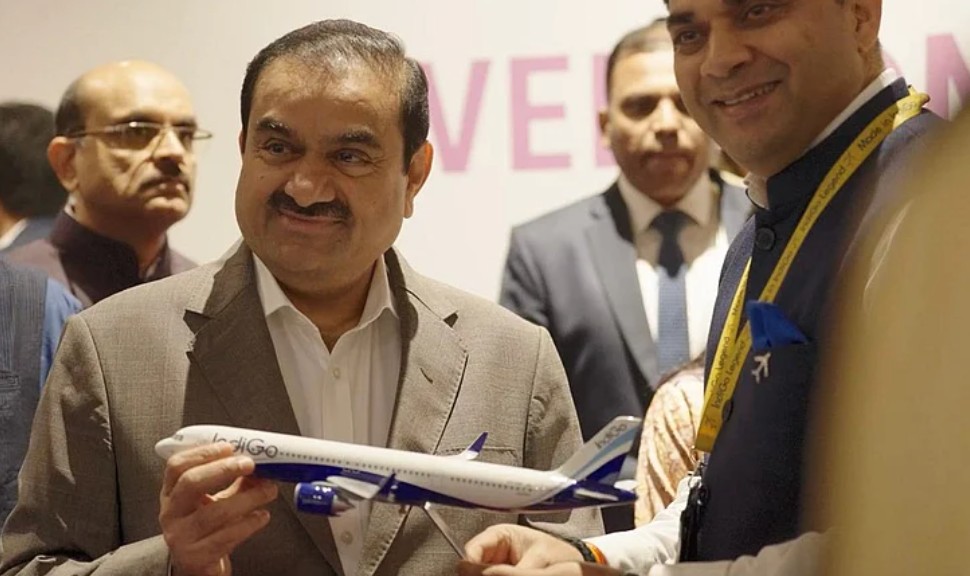
The launch of the Navi Mumbai International Airport (NMIA) has drawn national attention, not just for the scale of the project but also for the distinct approach adopted for its inauguration. Unlike conventional airport openings, the NMIA launch stood out for several reasons that underscored its strategic, economic and social significance.
Foremost among these was the airport’s positioning as a project of national importance. The launch highlighted NMIA’s role in easing congestion at Mumbai’s existing airport while strengthening India’s aviation capacity and global connectivity. Officials described it as a key pillar in the country’s long-term infrastructure and economic growth plans.
Another distinguishing feature was the emphasis on future-ready infrastructure. NMIA has been designed with modern systems, sustainable practices and advanced technology aimed at improving operational efficiency and passenger experience, while also addressing environmental concerns.
The airport’s potential impact on regional development was also central to the launch narrative. NMIA is expected to act as a growth engine for Navi Mumbai and surrounding areas, generating employment, boosting real estate and encouraging new business and logistics hubs across the region.
Multimodal connectivity further set the project apart. The airport is being integrated with road, rail and metro networks, positioning it as a major transport hub that will significantly reduce travel time and improve accessibility.
Finally, the launch saw strong public and community engagement, reflecting local pride in a long-awaited project. Together, these elements made the NMIA launch more than a ceremonial event, marking it as a transformative moment for the Mumbai Metropolitan Region and India’s aviation sector.
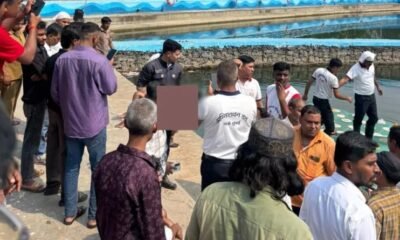



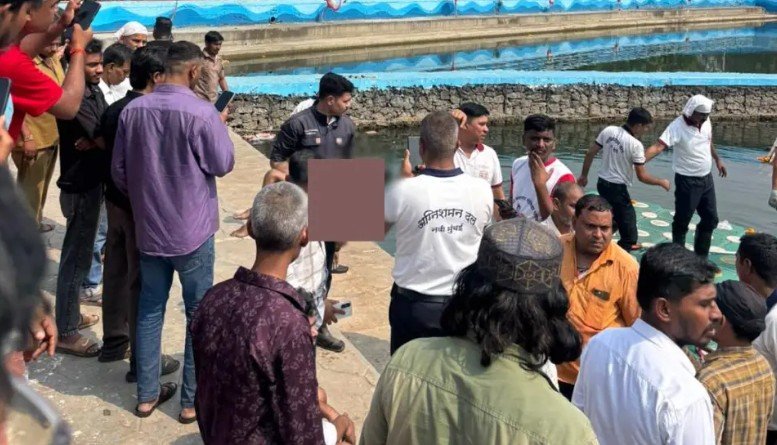
The boys, aged 10 and 12, reportedly entered the water to collect coins thrown during post-Navratri immersion rituals, raising concerns over safety measures.
The Case
Two children drowned in a pond at Kopri village in Vashi while reportedly trying to collect coins thrown into the water during immersion rituals following Navratri celebrations.
The victims were identified as Golu Mansuri, 10, and Ganesh Gupta, 12. According to preliminary information, the boys entered the pond with their friends to retrieve coins offered during the immersion of Goddess Durga idols and ceremonial pots.
The children reportedly misjudged the depth of the water and drowned. After receiving information about the incident, police and fire brigade personnel reached the spot and launched a rescue operation. The boys were recovered from the pond and taken to a civic hospital in Vashi.
The tragic incident has raised concerns about safety arrangements at the pond, particularly during festival-related immersion activities when people gather in the area.
Local residents have reportedly expressed concern over children entering the water despite the risks. They have also called for security guards to be deployed at the site to prevent people, especially minors, from entering the pond unsupervised.
Residents have urged the authorities to strengthen safety measures and ensure better supervision around the water body to prevent similar tragedies.
The incident highlights the dangers of entering ponds to retrieve coins or other objects without knowing the water’s depth. Authorities are being urged to take preventive steps to protect children and other visitors, especially during festivals and immersion ceremonies.
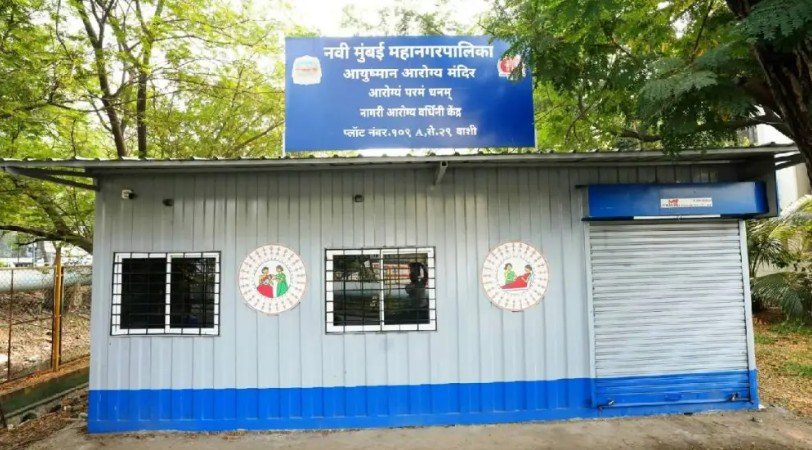
New facilities to offer free primary healthcare, vaccinations, medical tests and screening for diabetes and hypertension.
The Centres
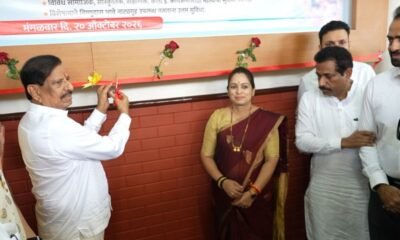
The Navi Mumbai Municipal Corporation (NMMC) has launched 59 Urban Ayushman Arogya Mandirs to improve access to primary healthcare and provide essential medical services closer to residents’ homes.
The centres were virtually inaugurated by Maharashtra Forest Minister Ganesh Naik on the occasion of Dussehra during a programme held at NMMC’s CBSE School No. 94 in Kopar Khairane. Established under the National Urban Health Mission and the 15th Finance Commission, the centres aim to strengthen healthcare services, particularly for people who may find it difficult to access larger hospitals for routine medical needs.
The facilities will provide free treatment for minor illnesses, including common ailments such as fever and cough. Services will also include maternal and child healthcare, antenatal check-ups, vaccinations and postnatal care. Residents will be able to undergo blood tests and screening for non-communicable diseases such as diabetes and hypertension. These services are expected to help identify health conditions at an early stage and encourage timely treatment. The centres will be staffed by healthcare professionals, including medical officers, nurses and multipurpose health workers. Free medicines will also be provided as required.
During the inauguration, Naik expressed confidence that the new facilities would make reliable healthcare more accessible to residents near their homes. The initiative is part of NMMC’s efforts to strengthen primary healthcare and reduce the need for residents to visit major civic hospitals for basic medical services.
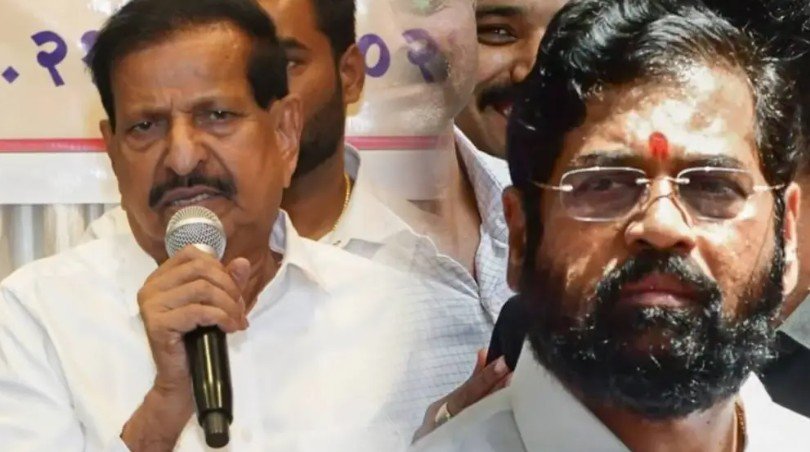
Decision sparks political tensions between Eknath Shinde and Ganesh Naik over redevelopment and civic infrastructure concerns.
The Projects
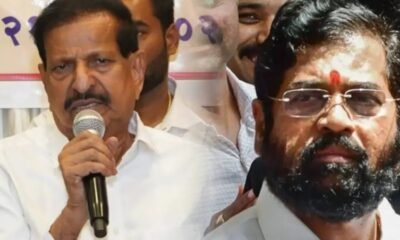
The Maharashtra government’s Urban Development Department, headed by Deputy Chief Minister Eknath Shinde, has lifted the stay on five cluster redevelopment projects in Vashi and Ghansoli, intensifying political differences with Forest Minister Ganesh Naik.
The Navi Mumbai Municipal Corporation (NMMC) had earlier decided to halt approvals for cluster redevelopment projects until a detailed study was conducted on their impact on the city’s infrastructure. Concerns were raised about the additional pressure redevelopment could place on roads and other civic facilities.
However, the state government has now cleared the way for five projects to move forward. According to reports, three projects had already received approval from a high-level committee headed by NMMC Commissioner Dr Kailas Shinde, while the remaining proposals were being processed.
The projects cover more than 1.25 lakh square metres across Vashi and Ghansoli. Ganesh Naik criticised the decision and indicated that he would approach the court. He maintained that concerns regarding infrastructure and the city’s future development needed to be addressed before redevelopment approvals were granted.
Meanwhile, Shiv Sena district chief Kishor Patkar criticised Naik and his supporters for allegedly delaying the projects. He also raised concerns about the safety of residents living in old and dilapidated buildings.
The decision has brought the differences between Shinde and Naik into focus, despite their parties being political allies in Maharashtra. The dispute centres on balancing the redevelopment of ageing buildings with the need to protect Navi Mumbai’s infrastructure and residents’ safety.

Two Children Drown in Vashi Pond While Collecting Immersion Coins

NMMC Launches 59 Urban Health Centres Across Navi Mumbai

Maharashtra Government Lifts Stay on Five Navi Mumbai Cluster Redevelopment Projects

Nidhi Razdan, fake Harvard professorship, and here is the explanation through her blog.

As the arrangement with Prashant Kishor falls through Rahul Gandhi has gone overseas again and is uncontactable

BSNL reveals all new 4G plans starting at ₹16

-
 Fact Check6 years ago
Nidhi Razdan, fake Harvard professorship, and here is the explanation through her blog.
-
 India4 years ago
As the arrangement with Prashant Kishor falls through Rahul Gandhi has gone overseas again and is uncontactable
-
 Technology5 years ago
BSNL reveals all new 4G plans starting at ₹16
-

 Latest News5 years ago
Government has spent ₹9,725 crores on Covid-19 vaccination drive so far
-

 Latest News5 years ago
Tata wins Air India with ₹18,000 crore bid
-

 Latest News5 years ago
Jharkhand government cuts Petrol price by massive ₹25 a litre but with a catch
-

 Latest News5 years ago
Raj Kundra Gave ₹25 Lakh Bribe to Mumbai Crime Branch to Avoid Arrest
-

 Navi Mumbai5 years ago
Navi Mumbai civic body raids and tests morning walkers, many found COVID positive