
India
After a nine-year wait Guwahati Municipal Corporation elections are set to take place

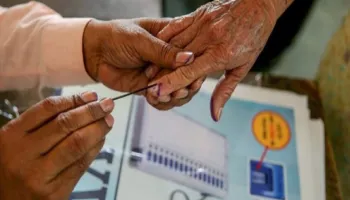
Elections to the Guwahati Municipal Corporation (GMC) are positioned to take place on Friday, after a nine-year wait, with electronic voting machines (EVMs) being utilized for the first time in all 60 wards under GMC.
Political parties have gone to great lengths to lure voters, promising a flood-free, crime-free city with piped water to every home and other fundamental civic amenities.
In all, 197 people are running in 57 wards, with three BJP candidates having previously been elected unopposed.
The BJP’s election campaign was led by Chief Minister Himanta Biswa Sarma, who spoke at various rallies around the city, while the saffron party’s coalition partner in Dispur, the Asom Gana Parishad (AGP), was led by Agriculture Minister and party president Atul Bora.
Bhupen Borah, the president of the Assam Pradesh Congress Committee, led the state’s largest opposition party on the campaign trail.
Aam Aadmi Party’s Delhi MLA Atishi Marlena was brought in to court voters, while Assam Jatiya Parishad’s president Lurinjyoti Gogoi was in charge of the campaign.
The parties held vehicle and bike rallies through the city streets in addition to door-to-door canvassing and rallies, with the campaign reaching a climax on Wednesday.
All houses would have access to piped water 24 hours a day, seven days a week, according to the BJP.
If elected to power in the local elections, the ruling BJP, which is running in 53 wards, has proposed a series of programs aimed at strengthening the city’s infrastructure.
The saffron party promised round-the-clock piped water to all families in its ‘Sankalpa Patra’ (election platform) presented by Chief Minister Himanta Biswa Sarma.
It has pledged to rid the city of waterlogging issues through a variety of programs, including the use of sophisticated technology to de-silt drains and river channels.
The BJP has pledged to make the city crime-free, provide land rights to city inhabitants, implement an integrated traffic management system, and implement scientific waste management.
The BJP had designated seven wards for its ally AGP to run in.
In its platform, the Congress, which is contesting 54 wards, promises to provide drinking water to all families in 100 days, build up 100 vending zones for small enterprises in 30 days, install functioning street lights, and make the city flood- and pollution-free.
On March 23, a notification for elections to GMC’s 60 wards was published, and the model code of conduct went into effect immediately.
Several 7,96,829 people will be entitled to vote at 789 polling places spread throughout 60 wards, with 3,96,891 men, 3,99,911 females, and 27 people of the third gender.
On the 24th of April, the votes will be counted.


Aspect Sports secures six-year operating rights, opening a new platform for emerging cricketers.
The Team
Cricket fans in Navi Mumbai have another reason to look forward to the next season of the T20 Mumbai League, with the city set to get its own franchise.
Aspect Sports has secured the operating rights for the new Navi Mumbai team for Rs 106.88 crore for six years, according to the Mumbai Cricket Association (MCA). The franchise will pay Rs 12.21 crore for its first season. The addition will take the league to nine teams, expanding its reach across the Mumbai metropolitan region. For local cricket fans and young players, the new franchise could provide a closer connection to the professional T20 competition.
MCA president Ajinkya Naik said the team would create additional opportunities for emerging cricketers to showcase their talent at a higher level. Officials from the league also said the new franchise would help attract a wider audience and strengthen the competition. Aspect Sports, owned by Aspect Global Ventures, has said it wants to build a stronger presence in sports and create opportunities for athletes.
The T20 Mumbai League has featured several established Indian players, including Suryakumar Yadav, Shreyas Iyer, Ajinkya Rahane, Shivam Dube and Shardul Thakur. With Navi Mumbai now entering the league, attention will turn to the team’s name, squad and home venue. For the city’s cricket community, the franchise could bring top-level T20 action closer to home while giving young local talent an opportunity to dream bigger.
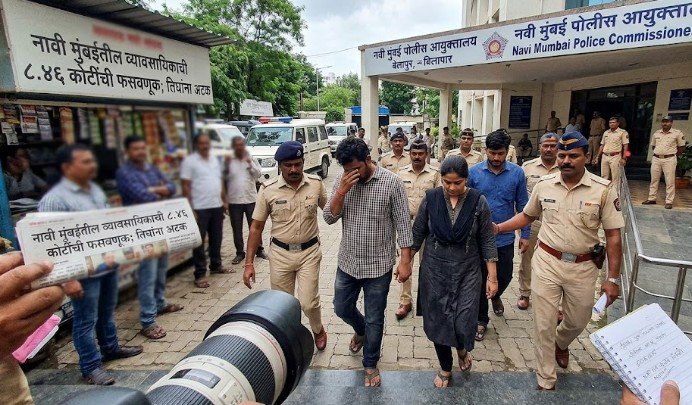
Police register case after businessman claims he was duped in a business-related transaction.
The Cheating
Navi Mumbai police have registered a case against three people for allegedly cheating a local businessman of Rs 8.46 crore in a business-related transaction.
According to the complaint, the businessman handed over a large sum of money to the accused in connection with a proposed business arrangement. However, the deal allegedly did not proceed as promised, and the money was not returned.
After attempts to recover the amount reportedly failed, the businessman approached the police and lodged a complaint. Based on his allegations, police have registered a case against the three accused and begun an investigation. Investigators are now examining the financial transactions and other documents related to the case to understand how the money changed hands and determine the individual roles of those named in the complaint.
The police are also expected to verify the claims made by the complainant and gather supporting evidence as the investigation progresses. The case involves a substantial amount of money and has drawn attention to the risks involved in high-value business transactions. Police officials have not yet established guilt, and the allegations against the accused remain subject to investigation and the legal process.
Further details are expected to emerge as investigators examine financial records and question the people connected with the transaction.
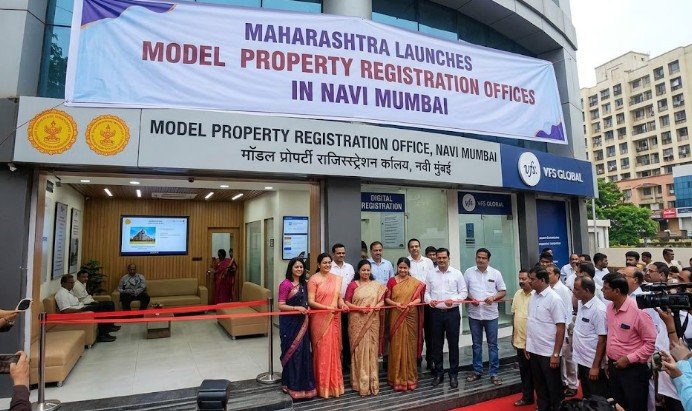
New centres in Mumbai, Navi Mumbai and Nagpur aim to make property registration quicker and more convenient.
The Launch
Property registration in Maharashtra is set to become more convenient with the launch of three new Model Sub-Registrar Offices (SROs) in Mumbai, Navi Mumbai and Nagpur.
The new centres have been opened at BKC in Mumbai, Mahape in Navi Mumbai and North Ambazari Road in Nagpur. The initiative is aimed at reducing waiting time and making the registration process smoother through greater use of digital services.
Citizens can complete Public Data Entry (PDE) online, make payments through the government portal and book appointments through the e-Step In system. The offices will handle common property-related documents, including sale deeds, lease deeds, gift deeds, powers of attorney and wills.
The new facilities are designed to offer a more comfortable experience for citizens. They include air-conditioned waiting areas, Wi-Fi, drinking water and trained staff to assist applicants during the registration process. However, the Model SROs will operate as an optional service alongside existing government registration offices. Citizens choosing the new service will have to pay an additional service fee of Rs 5,500, while regular SROs will continue to provide registration services without this fee.
The state government plans to expand the initiative by establishing 60 Model SROs across Maharashtra in phases. For property buyers, sellers and families handling property documents, the new centres are expected to provide a more organised and technology-driven registration experience.

Navi Mumbai to Get New Team in T20 Mumbai League

Three Booked for Allegedly Cheating Navi Mumbai Businessman of ₹8.46 Crore

Maharashtra Launches Model Property Registration Offices in Navi Mumbai

Nidhi Razdan, fake Harvard professorship, and here is the explanation through her blog.

As the arrangement with Prashant Kishor falls through Rahul Gandhi has gone overseas again and is uncontactable

BSNL reveals all new 4G plans starting at ₹16

-
 Fact Check6 years ago
Nidhi Razdan, fake Harvard professorship, and here is the explanation through her blog.
-
 India4 years ago
As the arrangement with Prashant Kishor falls through Rahul Gandhi has gone overseas again and is uncontactable
-
 Technology5 years ago
BSNL reveals all new 4G plans starting at ₹16
-

 Latest News5 years ago
Government has spent ₹9,725 crores on Covid-19 vaccination drive so far
-

 Latest News5 years ago
Tata wins Air India with ₹18,000 crore bid
-

 Latest News5 years ago
Jharkhand government cuts Petrol price by massive ₹25 a litre but with a catch
-

 Latest News5 years ago
Raj Kundra Gave ₹25 Lakh Bribe to Mumbai Crime Branch to Avoid Arrest
-

 Navi Mumbai5 years ago
Navi Mumbai civic body raids and tests morning walkers, many found COVID positive